

Performance is often discussed in reports, meetings and systems. However, when key measures are not visible at the point of work, it becomes harder for teams to stay aligned, respond quickly and maintain consistent focus.
KPI boards help bridge this gap by making performance visible, understandable and part of everyday routines. When teams can see priorities, targets and progress clearly, they are better able to coordinate actions and respond to change.
For many organisations, this visibility supports more structured daily management and stronger communication across teams.
Why KPI boards matter
Organisations track performance for many reasons — to improve productivity, maintain quality, support delivery and strengthen decision-making. However, information that sits in reports or dashboards alone can be difficult to use in day-to-day operations.
KPI boards bring key measures into the working environment so they can be reviewed regularly and discussed as part of normal routines.
This helps teams:
-
understand current performance
-
stay focused on priorities
-
align around shared goals
-
recognise changes early
-
support consistent follow-up
Over time, this visibility helps reinforce habits that support performance and accountability.
Moving from reporting to visibility
Many organisations already collect performance data. The challenge is not always measurement, but visibility.
When measures are visible:
-
teams can interpret performance more quickly
-
conversations become more focused
-
decisions are supported by shared information
-
priorities remain clear
As a result, KPI boards help move performance from something reviewed periodically to something managed continuously.
How KPI boards improve performance
KPI boards support performance not simply by displaying information, but by helping teams review, discuss and act on what they see.
Supporting regular performance review
Visual boards provide a consistent focal point for reviewing performance. Teams can quickly see how work is progressing and where attention is needed.
Making trends easier to spot
When performance is visible over time, patterns become easier to recognise. This helps teams identify recurring issues and respond earlier.
Supporting ownership and accountability
Visible measures help clarify responsibilities and encourage follow-up. Teams can see who is responsible and what actions are in progress.
Strengthening communication
KPI boards help ensure conversations are grounded in shared information rather than assumptions. This supports alignment across shifts, teams and departments.
Linking performance to action
Perhaps most importantly, KPI boards connect performance information with practical next steps. Instead of remaining abstract, performance becomes something teams can respond to in real time.
What to include on a KPI board
The structure of a KPI board depends on how teams manage performance in practice. While layouts vary, most effective boards focus on the information teams review regularly and use to guide day-to-day decisions.
Core operational performance measures
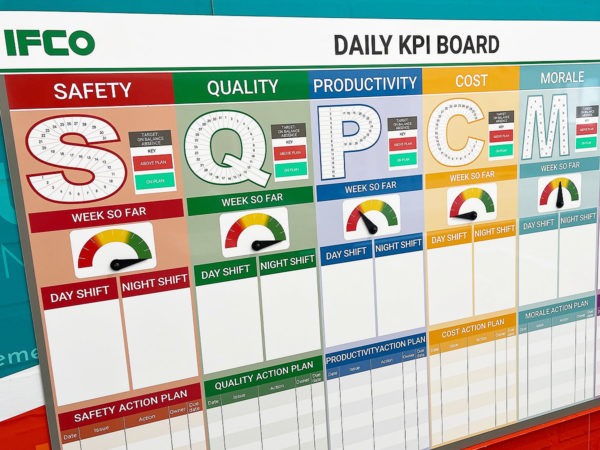
In many environments, KPI boards centre on measures such as:
-
output or productivity
-
quality
-
delivery performance
-
safety indicators
-
downtime or disruption
-
workload visibility
Targets and expectations
Performance becomes more meaningful when linked to clear targets. Teams can see what is expected and where gaps are emerging.
Actions and follow-up
KPI boards often include structured areas for:
-
issues
-
actions
-
responsibilities
-
follow-up
This ensures performance information leads to practical next steps.
Trends over time
Visualising performance across days or weeks helps teams recognise patterns and respond earlier.
Broader team and service measures
KPI boards are also useful for:
-
service response measures
-
project performance
-
team objectives
The principle remains the same: making performance visible so it can be reviewed and acted upon.
KPI boards in different environments
KPI boards are used wherever performance needs to be visible and regularly reviewed.
Manufacturing
Output, quality, downtime and delivery visibility.
Logistics and warehousing
Flow, dispatch and workload coordination.
Food production and processing
Hygiene, quality and production performance.
Operations teams
Planning, coordination and resource alignment.
Safety-focused environments
Incident tracking, actions and trends.
Sales teams
Targets, pipeline and performance visibility.
Service teams
Response times, workload and delivery performance.
Common mistakes with KPI boards
Including too many measures
Clutter reduces clarity and focus.
Treating the board as reporting
Boards must support discussion and action.
Lack of regular updates
Outdated information reduces engagement.
Disconnect from routines
Boards must be part of daily management.
Unclear ownership
Responsibility keeps boards active.
Overcomplicated layouts
Simplicity supports usability.
Focusing on design before purpose
Purpose must lead structure.
What effective KPI boards have in common
Clear purpose
Teams understand why the board exists.
Focus on the right measures
Priority information is visible.
Part of regular routines
Boards support daily management.
Easy to understand
Information is structured clearly.
Linked to action
Performance leads to decisions and follow-up.
Designing KPI boards around your process
Because every organisation tracks performance differently, KPI boards are most effective when shaped around specific workflows, measures and routines.
This ensures the board reflects real priorities and supports how teams operate day to day.
Start my board
If you’re looking to make performance more visible, the next step is defining what your team needs to see, review and act on regularly.
From there, a KPI board can be structured around your processes and priorities.
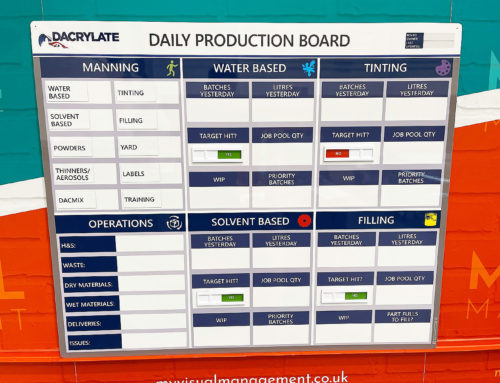
Making performance visible at the point of work
Turning metrics into daily action
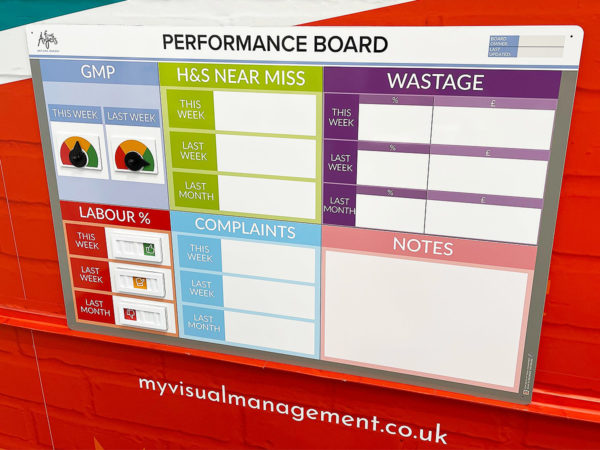
Where performance, priorities and progress come together
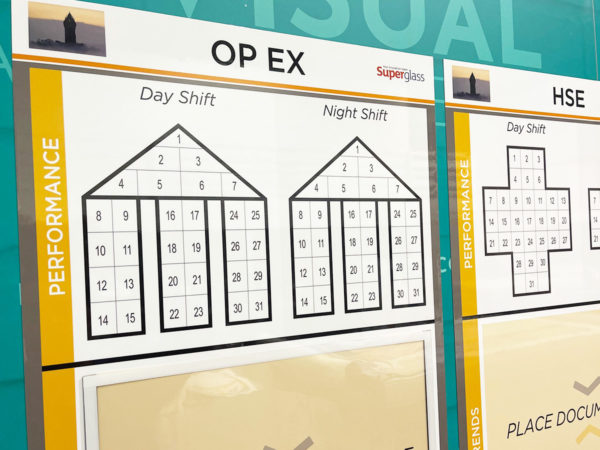
Helping teams stay aligned around what matters most
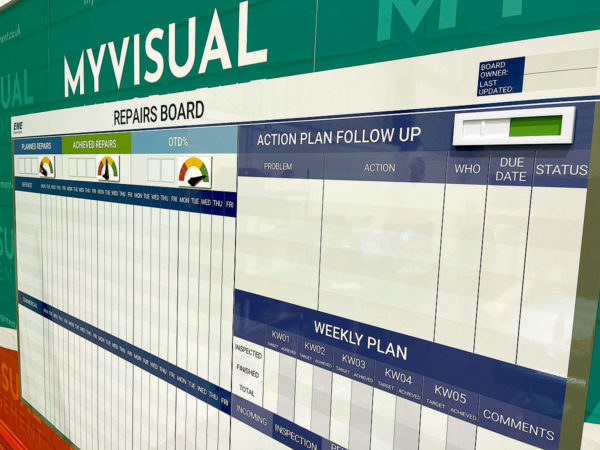
From data to decisions — made visible
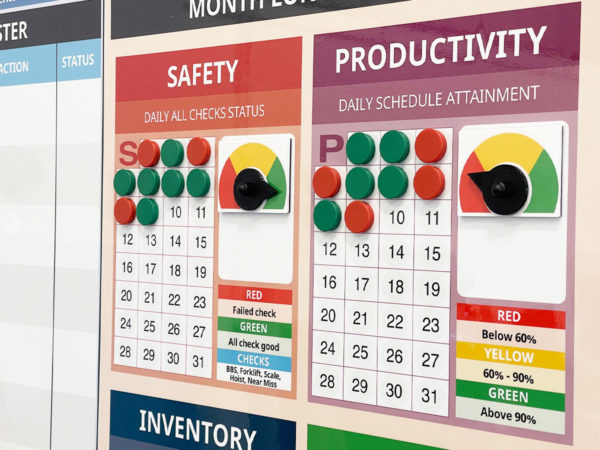
Clear performance visibility supports better daily management
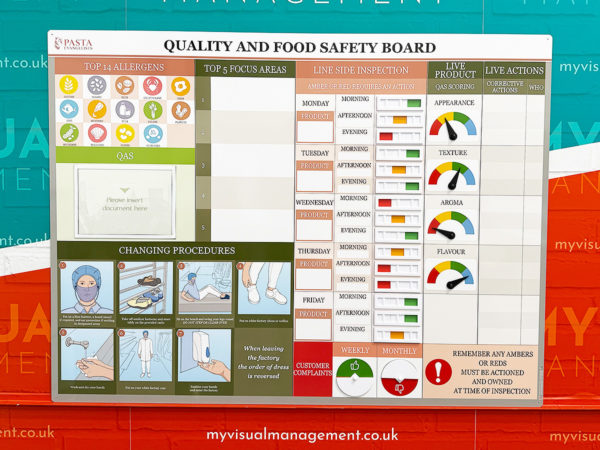
Bringing targets, results and actions into one place
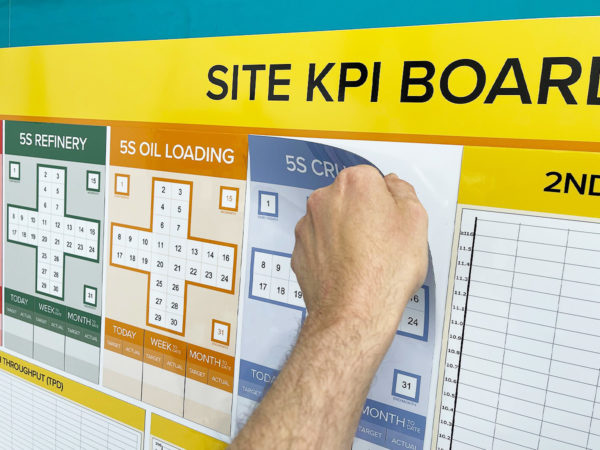
Supporting accountability through shared visibility
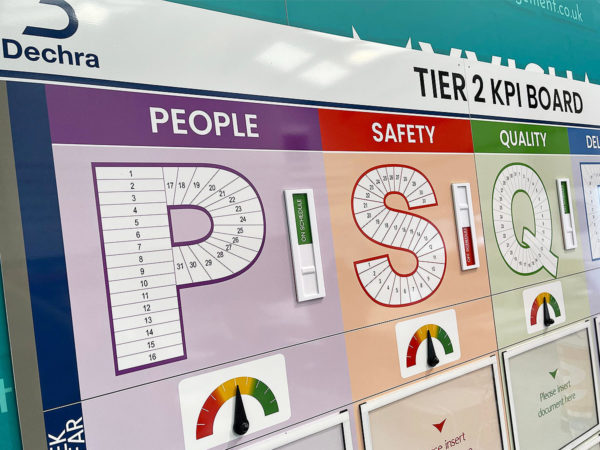
Real-time performance visibility on the shop floor
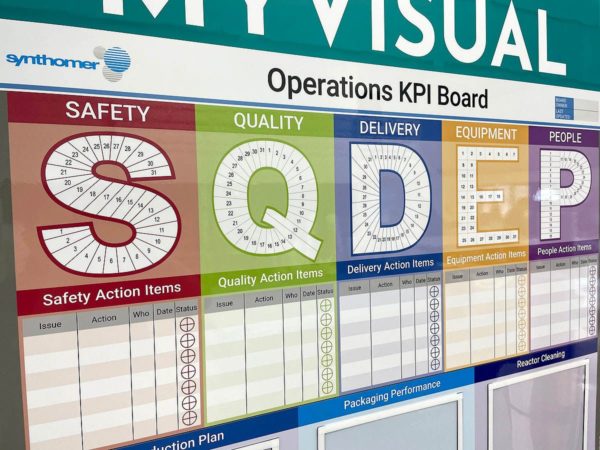
Tracking output, quality and delivery in one place
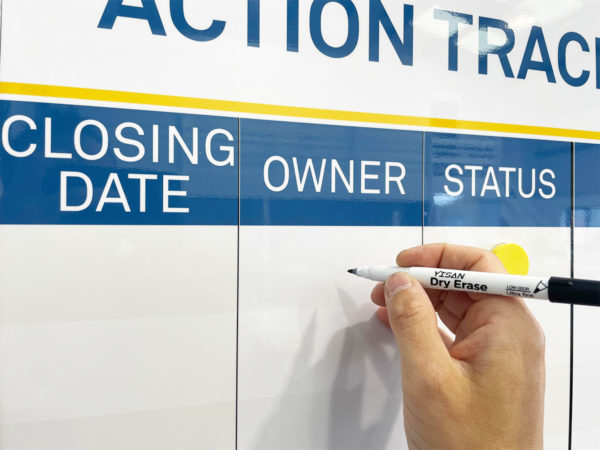
Helping teams respond faster to change
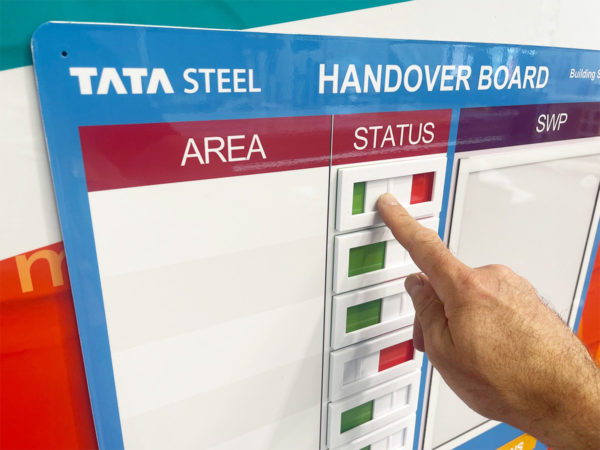
Supporting consistent routines across shifts
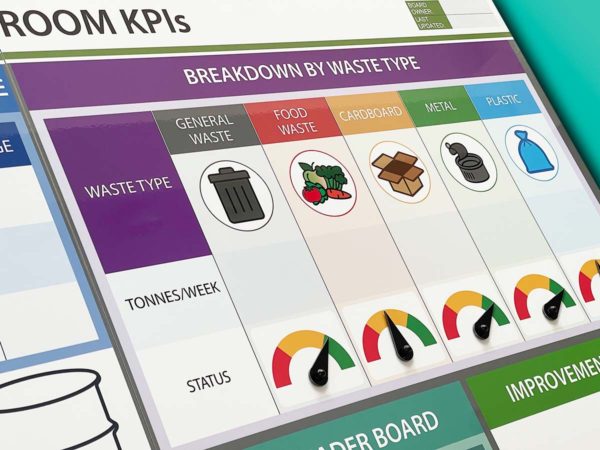
Supporting hygiene, quality and production visibility
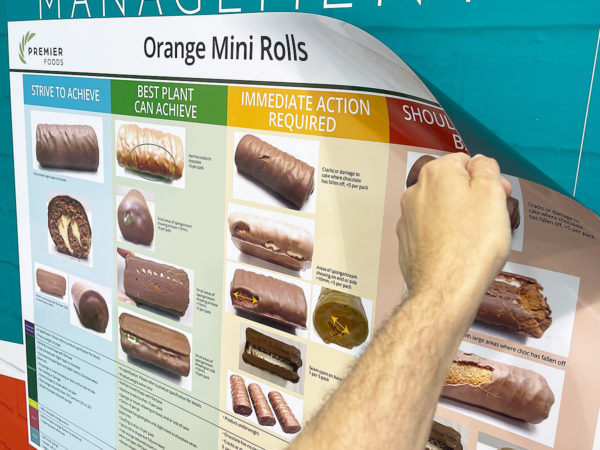
Helping teams maintain consistency and compliance
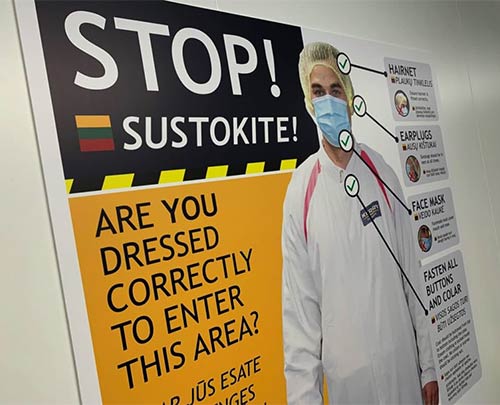
Keeping critical routines visible in food production environments
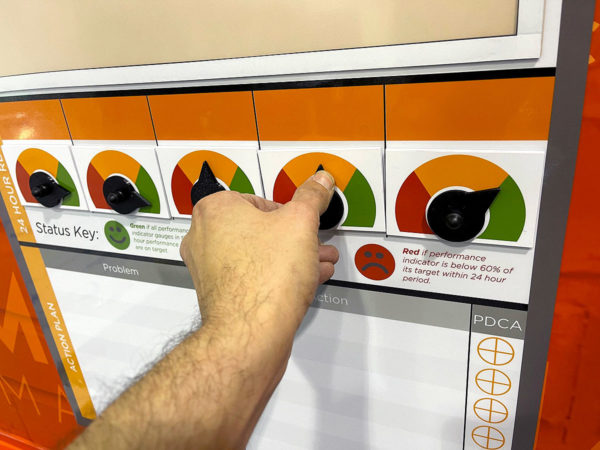
Visibility that supports better decisions
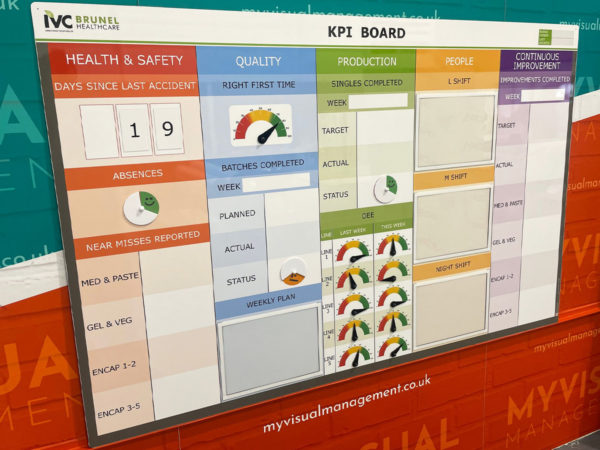
Designed around how teams actually work
Further examples


KPI status with status indicators

KPI daily meeting board

Supply Chain KPI board

Operational KPI board

KPI board with document holders

KPI board status meters

Daily KPI Board

Site KPI Board with modular magnetics

KPI board with board accessories

Product KPIs board with status meters

Production Floor KPIs

Management KPIs for SQDPCP
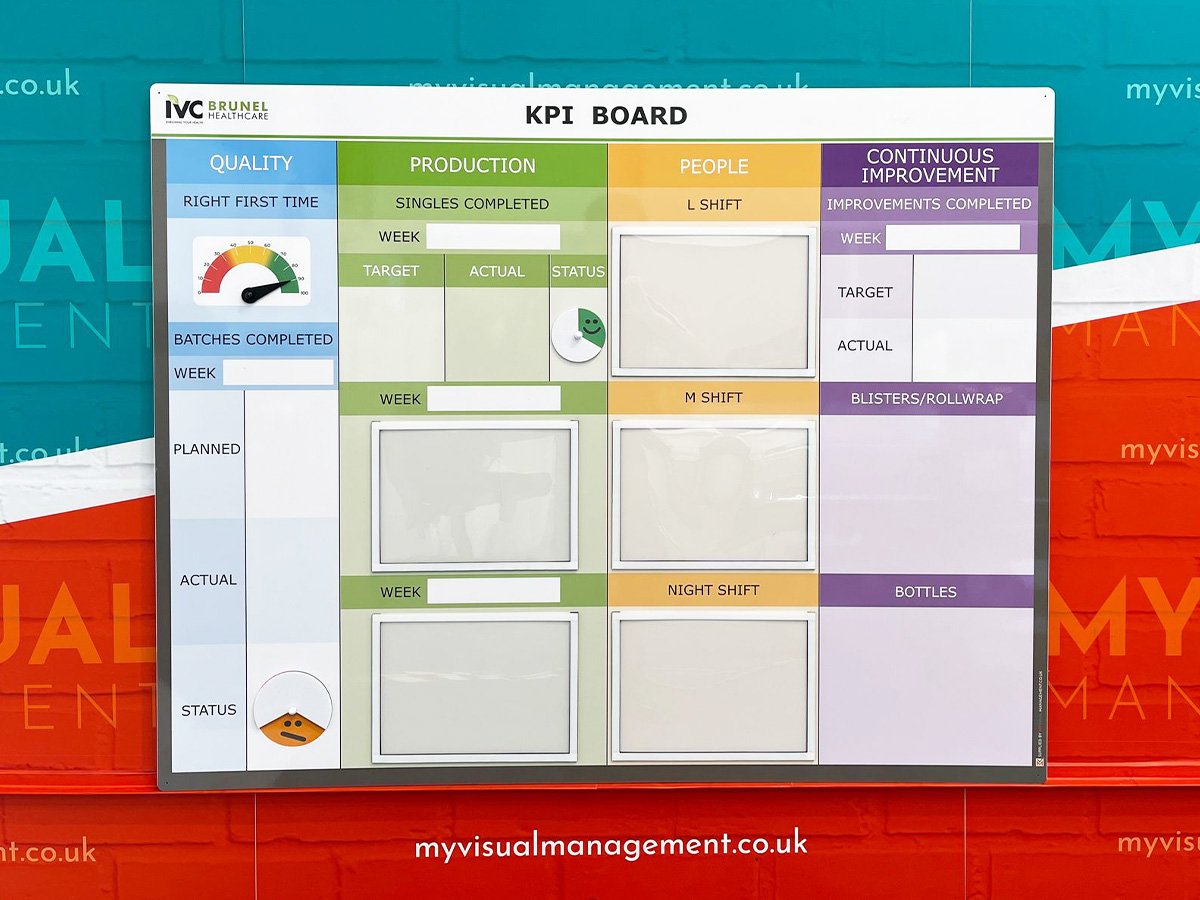
KPI board with accessories

KPI board with document holders

Department KPIs

KPI board with status meters

KPI board with status sliders

Monthly KPI Board

KPI dashboard

Operational KPIs Board

Sales & KPI Tracker
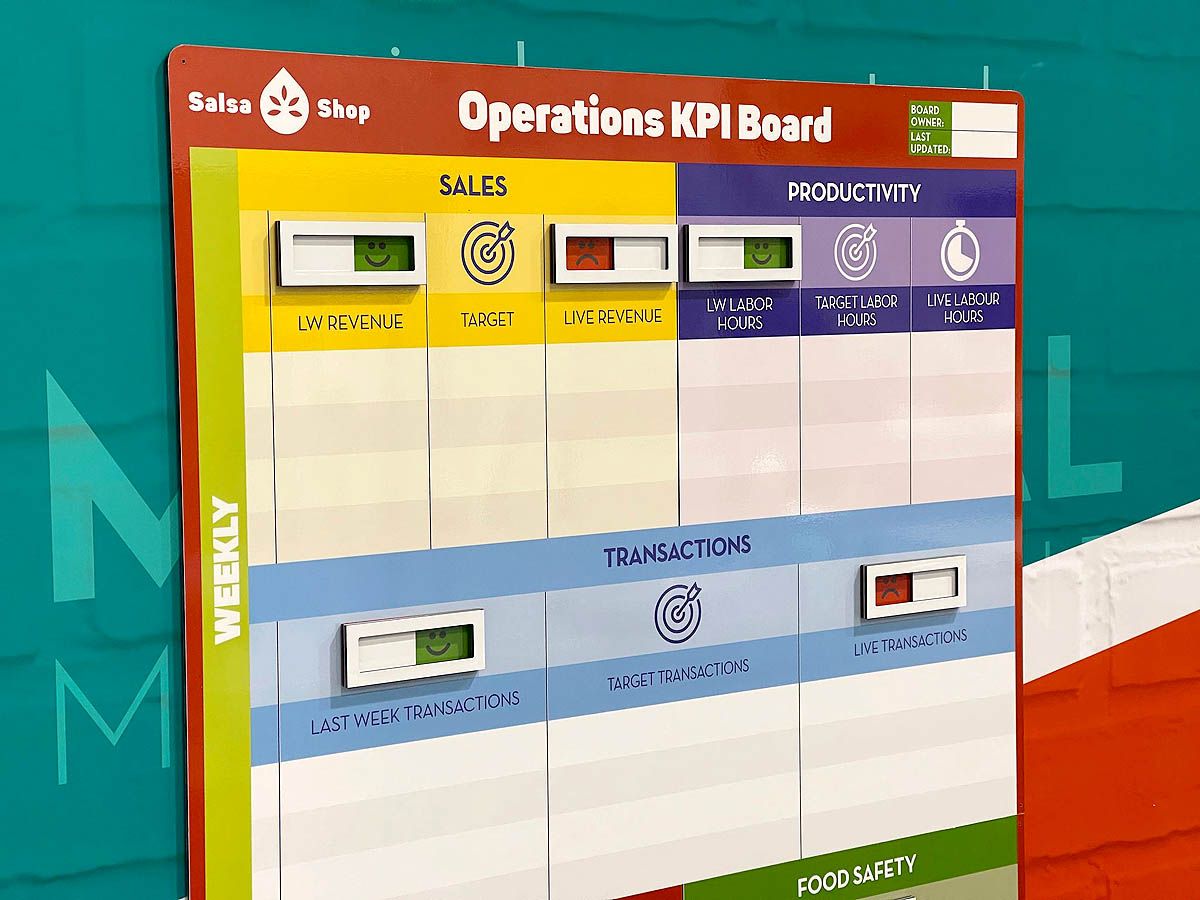
Include status sliders to track KPIs

Track your global KPIs
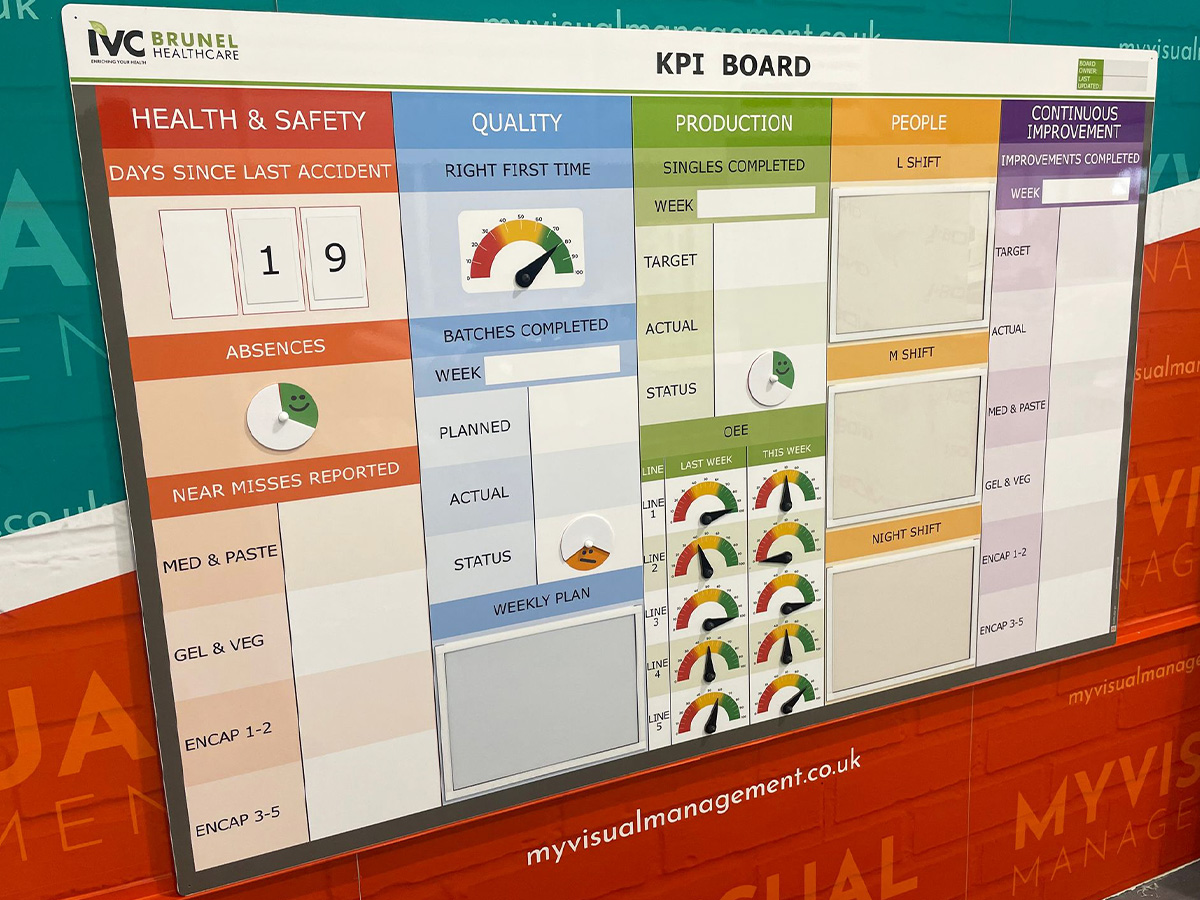
KPI board with status accessories

Choose which KPI metrics to track

Colour coded KPI board

Coloured coded KPI Board

Range of KPI document holders

KPI Board with magnetic headings

KPI board with document holders

KPI Board with document holders

Warehouse status KPI Board

Updatable KPI magnetic headings

KPI status meter tracking

Polish KPI board

Colour coded KPI Board

Production KPI with document holders

KPIs for distribution
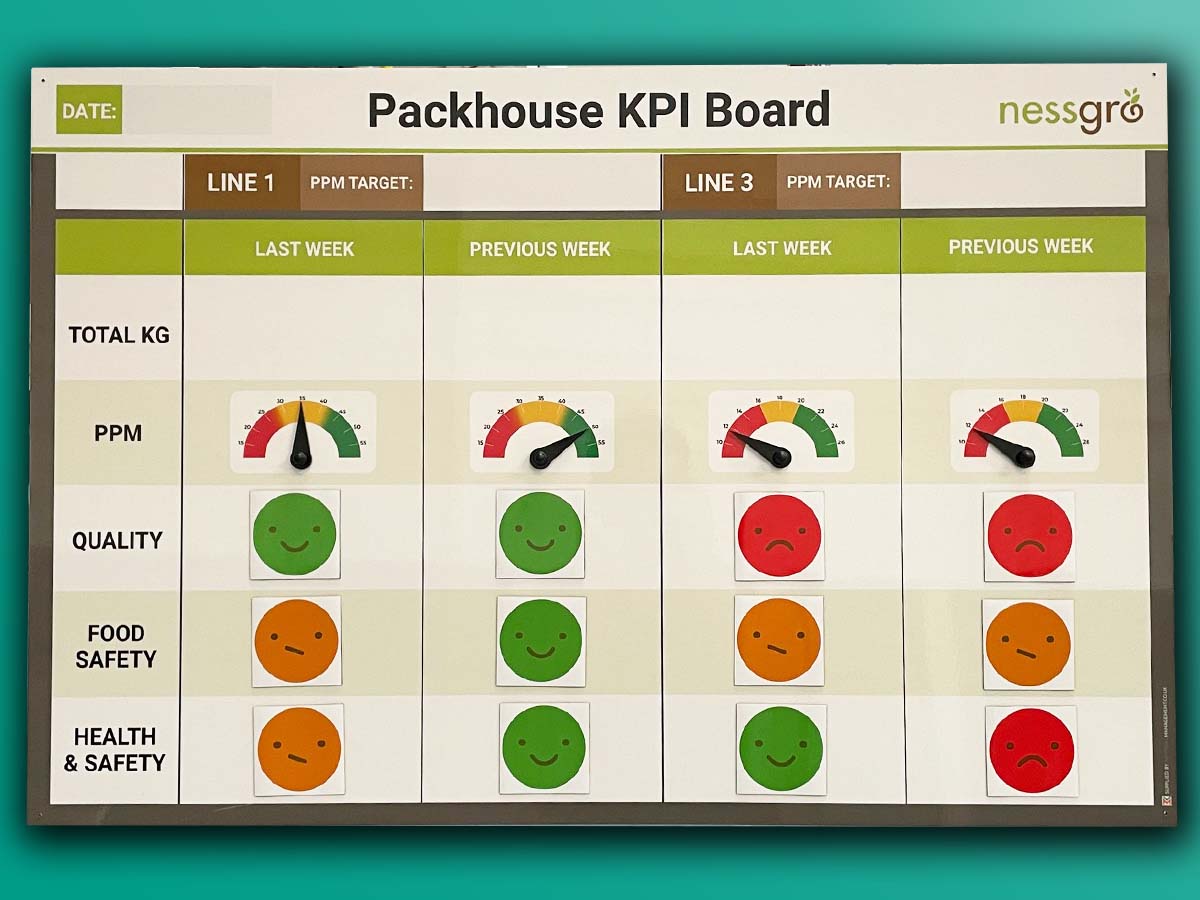
Production KPIs with status indicators

OPEX board

Operations KPI Board

KPI tracker with green tick status

Operations KPI with document holders
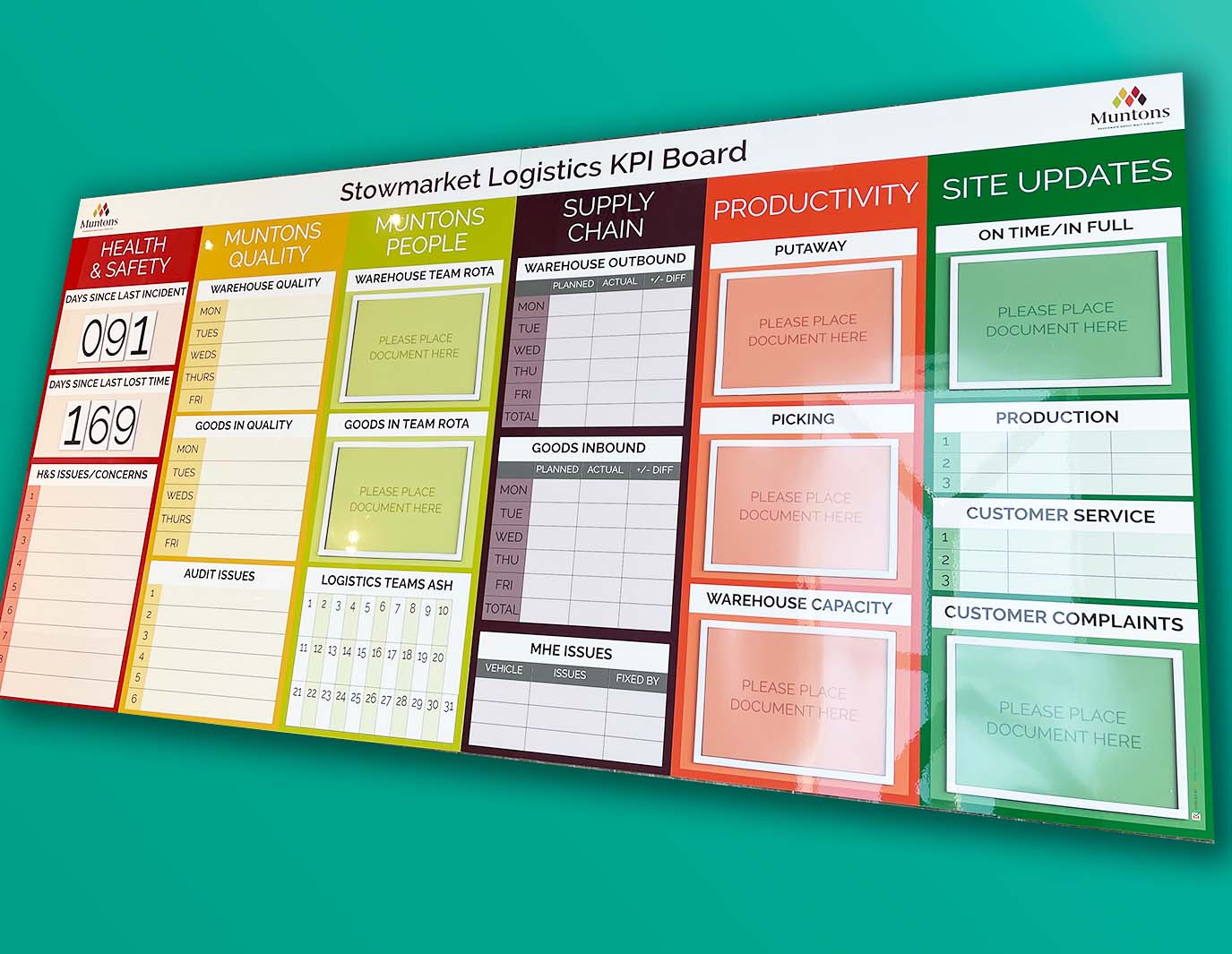
Logistics KPI board

Engineering department KPI board

Use for your department meetings

Track your logistics KPIs

Add document holders to your KPI board

Show your objectives and results

Use custom made status indicators

Double sided magnetic status labels

Magnetic overlay for your KPI board

Make your KPI board multilingual

Food production KPI board

Multilingual KPI board

Dry wipe status circles

Custom quality control materials board
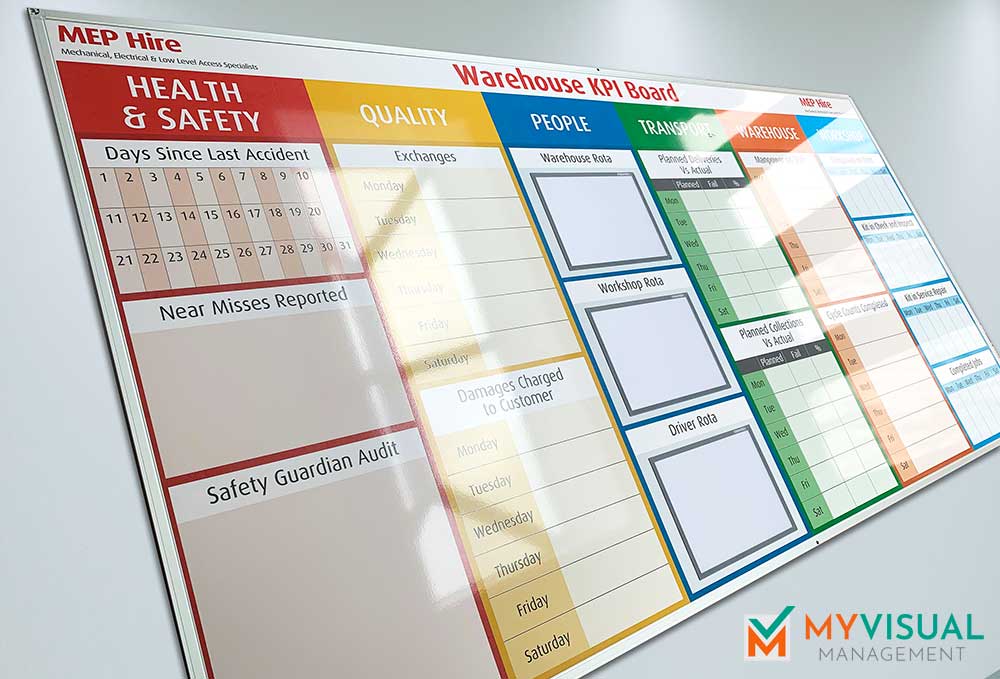
Customised KPI board

Show progress with status dials

Magnetic indicator titles
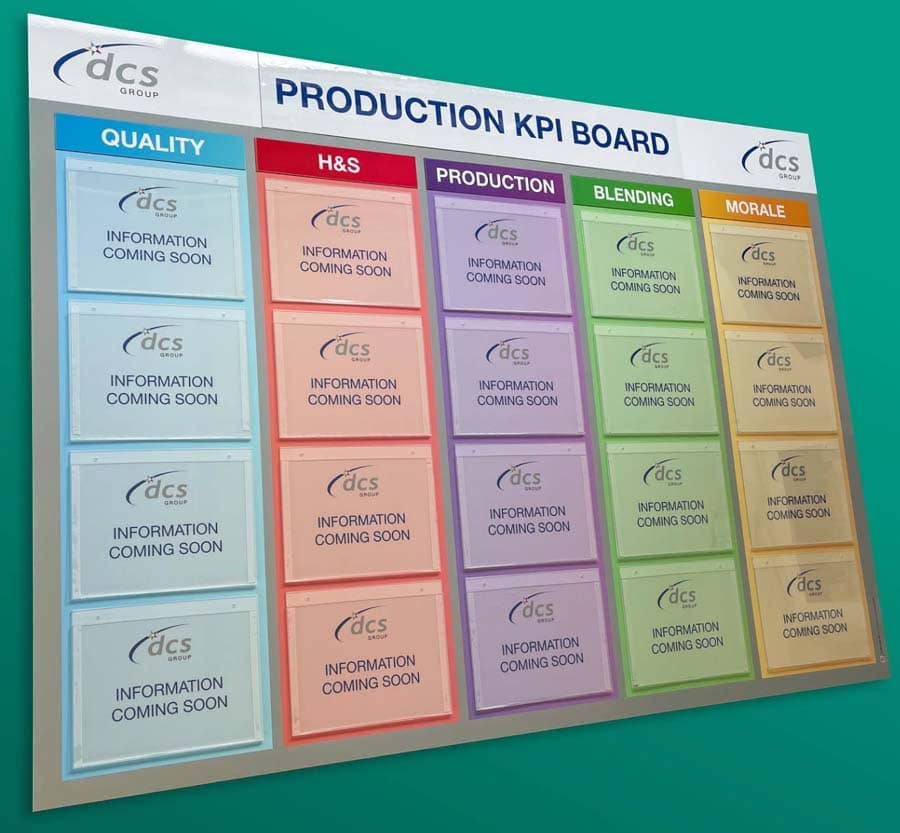
Production KPI board

KPI board with magnetic title

Dry wipe board


Our Approach
We create visual management boards everyday. As a result we have plenty of experience. We work for organisations in food production, the power industry, national rail, pharmaceuticals, education, healthcare, packaging and distribution.
Our team works with a simple idea or sketch and creates a professionally designed layout. This is then turned into a highly functional visual management board.
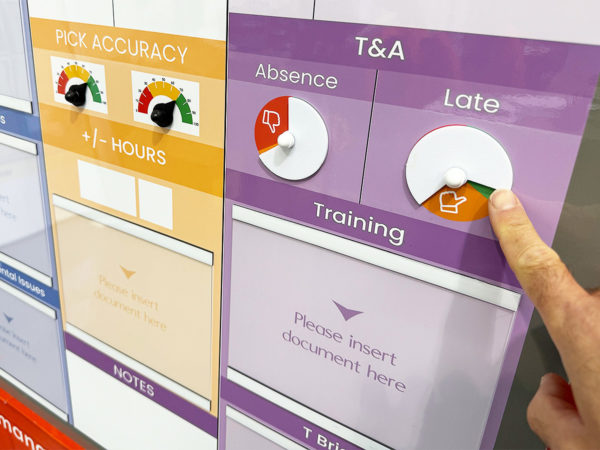
We offer customised options because we want to create the perfect board for you. So, here are a few examples. We can add magnetic areas or a dry-wipe finish (for use with whiteboard pens). Furthermore, you can choose Red/Green sliders or R.A.G. (Red, Amber, Green) status dials so you can quickly and visually update your board. These are just a few examples of the ways in which our boards can be tailored to meet your needs. You may also be interested in whiteboard overlays that can be used on top of an existing magnetic board.