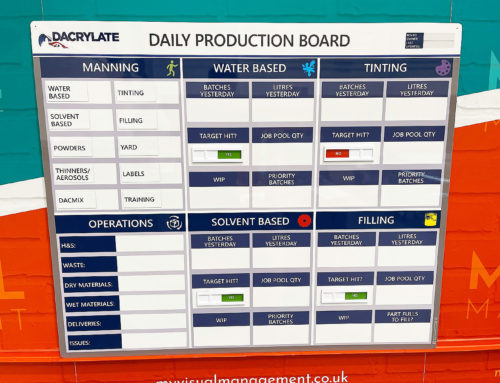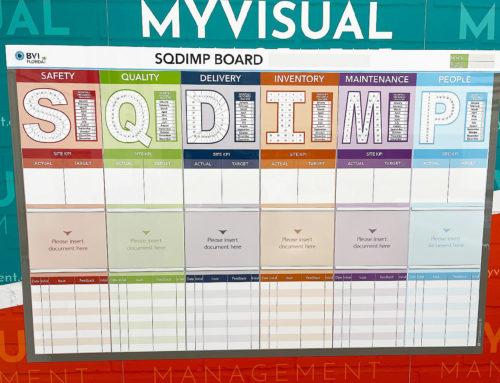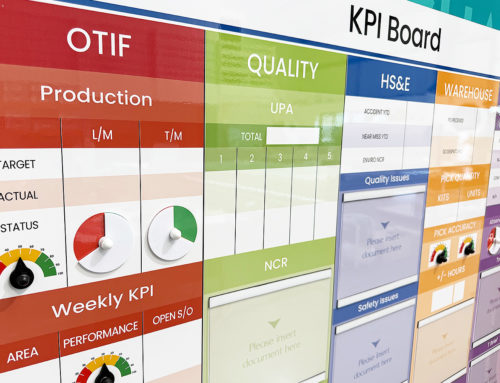


Visual management boards help organisations move from relying on memory, emails and conversations to working with clear, visible information
Why visual management boards improve performance
Visual management boards are widely used in manufacturing, operations and logistics to make performance, priorities and problems visible at the point of work. Increasingly, they are also being adopted in healthcare, construction and office environments where teams need clarity, coordination and shared understanding.
This is why visual management remains a central part of Continuous Improvement, lean working and operational excellence programmes across a wide range of industries.
What is a visual management board?
In short, a visual management board is a structured display used to make important information visible, understandable and actionable.
It typically brings together key elements such as:
-
performance measures
-
priorities and targets
-
actions and follow-up
-
responsibilities
-
current issues or risks
Rather than being stored in reports or systems, this information is placed where work happens so that teams can review, discuss and act on it as part of their normal routines.
Visual boards are not simply information displays — they are tools that support communication, accountability and daily management.
Why visual management boards work
Visual management works because it aligns how people naturally process information with how work is managed.
Visibility improves understanding
When information is visible, it is easier to interpret and act upon. Therefore, teams can quickly see what is expected, what is happening now and where attention is needed.
Shared information supports alignment
Visual boards create a common reference point. As a result, everyone sees the same information, which supports consistent decision-making across teams, shifts and roles.
Regular review reinforces habits
Visual boards are most effective when used as part of daily or weekly routines. consequently, reviewing information regularly helps teams stay aligned, follow up on actions and identify emerging issues early.
Clear structure supports accountability
When responsibilities, actions and progress are visible, it becomes easier to understand ownership and next steps.
Simplicity encourages engagement
Visual tools are often easier to engage with than complex systems or reports. Importantly, when information is clear and accessible, teams are more likely to use it consistently.
The benefits of visual management boards
Organisations use visual management boards because they make work easier to understand and easier to manage.
Improved performance visibility
Teams can see targets, progress and results at a glance, helping maintain focus and respond quickly when performance changes.
Clearer communication across teams
Visual boards create a shared reference point, reducing reliance on emails or informal updates.
Stronger support for Continuous Improvement
Boards highlight recurring issues, track actions and reinforce improvement activity.
Faster identification of problems
Visibility helps teams recognise issues early, before they become embedded.
Greater accountability and ownership
Responsibilities and follow-up are visible, supporting proactive working.
Improved engagement with day-to-day management
Accessible information encourages participation and practical conversations.
How visual management boards improve daily operations
Visual boards become most valuable when embedded into everyday routines. Teams often move from understanding visual management to implementing visual management boards within their own environment.
Supporting daily team meetings
They provide a focal point for reviewing priorities, performance and challenges. Many organisations use KPI boards as part of their visual management approach to make performance visible and support daily decision-making.
Improving shift handovers
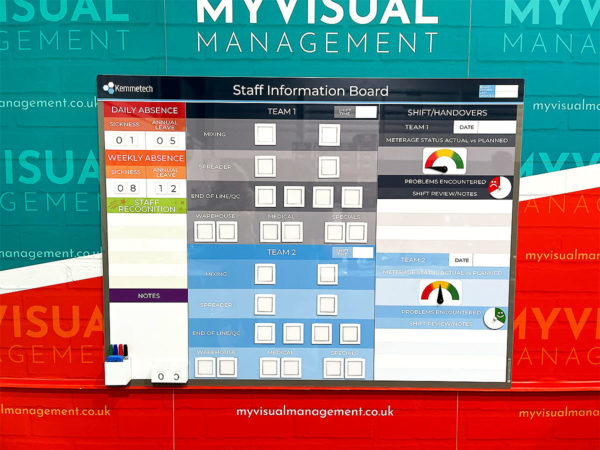
Incoming teams can quickly understand status and outstanding issues.
Making performance visible at the point of work
Teams can see how daily activity influences outcomes in real time.
Supporting safety communication
Boards help reinforce safety messages and track actions.
Reinforcing Continuous Improvement routines
Improvement ideas, actions and outcomes remain visible and followed up.
Supporting planning and coordination
Workloads, priorities and dependencies are easier to manage.
Where visual management boards are used
Visual boards are used wherever teams need clarity and coordination.
Manufacturing
Used for performance tracking, CI activity and daily management.
Logistics and warehousing
Support workload visibility, dispatch planning and shift coordination.
Food production and processing
Help maintain hygiene routines, production visibility and quality communication.
Construction
Support site coordination, safety communication and action tracking.
Healthcare
Used for team coordination, patient flow and operational communication.
Facilities management
Support maintenance planning, contractor coordination and compliance visibility.
Office and service environments
Used for project tracking, team priorities and performance visibility.
What makes a visual management board effective
Effective boards are built around clarity, routine and usability.
Clarity of purpose
Teams understand what the board is for and how it is used.
Focus on the most important information
Key measures, priorities and actions are prioritised.
Designed for regular use
Boards are integrated into daily or weekly routines.
Clear ownership
Responsibility for updates and review is defined.
Easy to understand at a glance
Information is structured and visually consistent.
Linked to real actions
Boards support decisions and follow-up.
Common mistakes with visual management boards
Treating the board as a display
Boards lose impact when not used in routines.
Including too much information
Clutter reduces clarity.
Lack of regular updates
Outdated boards reduce engagement.
No clear ownership
Responsibility gaps lead to neglect.
Disconnect from daily routines
Boards outside workflows lose relevance.
Overcomplicating the design
Complexity reduces usability.
Introducing boards without team involvement
Engagement drops when teams are not included.
Frequently asked questions about visual management boards
What is the purpose of a visual management board?
To make priorities, performance and actions visible and easy to act on.
How do visual management boards improve performance?
They support visibility, alignment and quicker responses to change.
Where are visual management boards used?
Across manufacturing, logistics, food production, healthcare, construction and service environments.
What should be included on a visual board?
Performance measures, priorities, actions, responsibilities and current issues.
How often should boards be updated?
As part of daily or weekly routines.
Who maintains the board?
Typically a team leader, supervisor or coordinator.
Are visual boards only for manufacturing?
No — they are widely used across many sectors.
Can visual boards work alongside digital systems?
Yes, they complement digital tools by making key information visible at the point of work.
Considering visual management for your organisation
If you’re exploring how visual management could support your teams, the most effective starting point is usually identifying where clarity and coordination would make the biggest difference.
For some organisations, that may be performance visibility. For others, it may be daily communication, safety routines or improvement activity. Starting with a clear purpose helps ensure visual boards become part of everyday work rather than a standalone initiative.
Over time, many teams refine their approach — adjusting layouts, routines and content to better support how work is managed in practice.
The goal is not simply to introduce a board, but to create a system that supports visibility, communication and consistent follow-up.
Give staff the information they need in a visual way
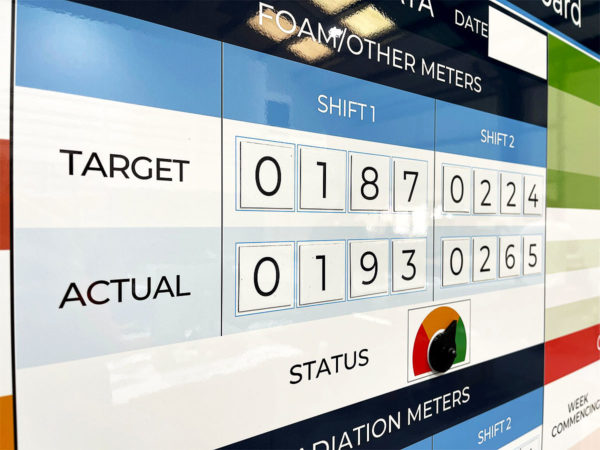
Understand performance, at a glance
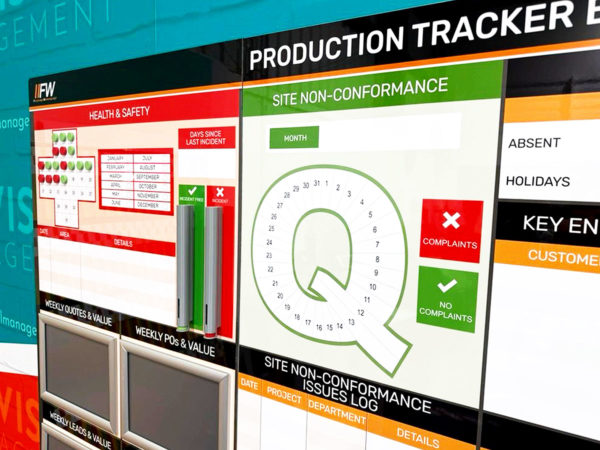
Drive quality forward
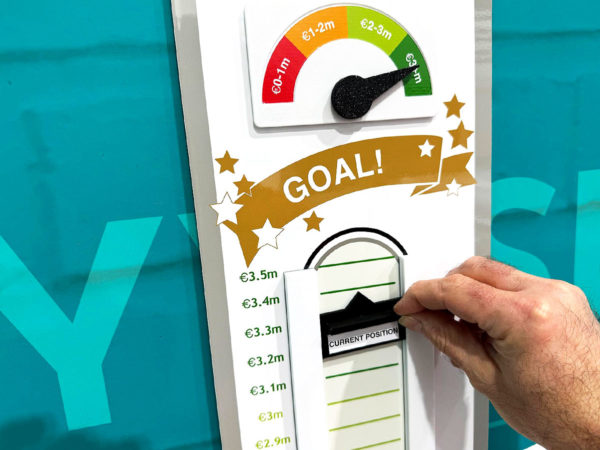
Make targets instantly clear
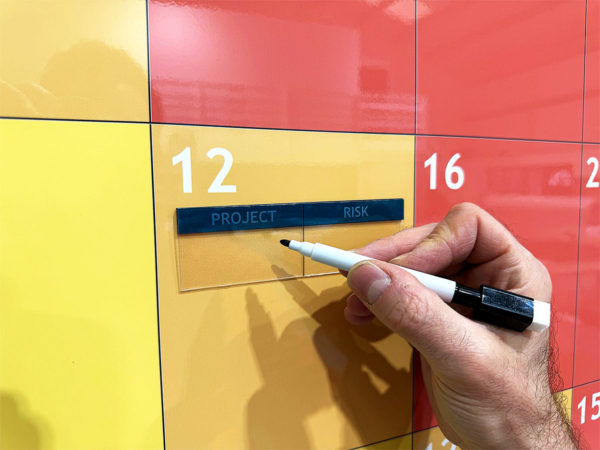
Visual, interactive and intuitive, at a glance
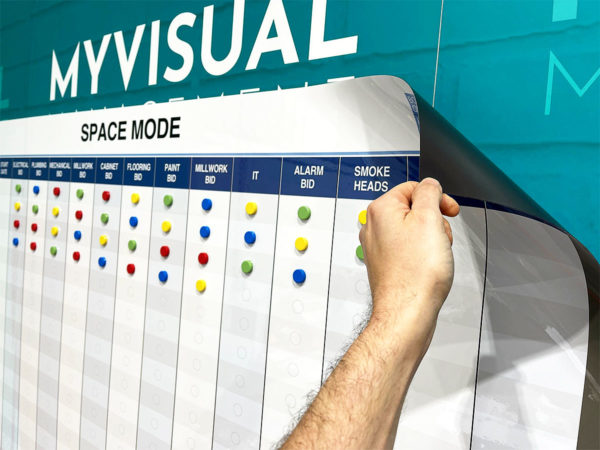
Visual tools that are exacting and fit for purpose in any setting
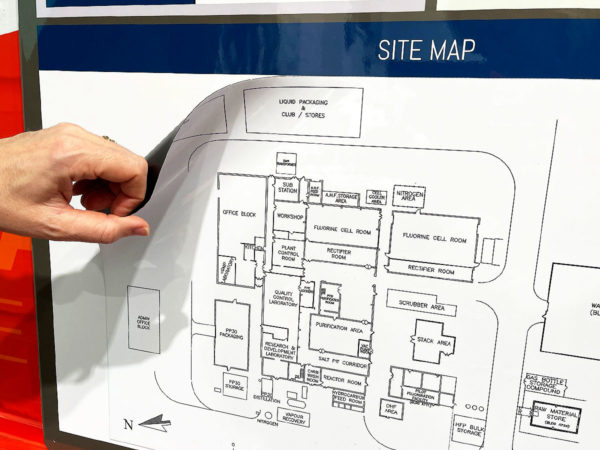
Quick and easy to update
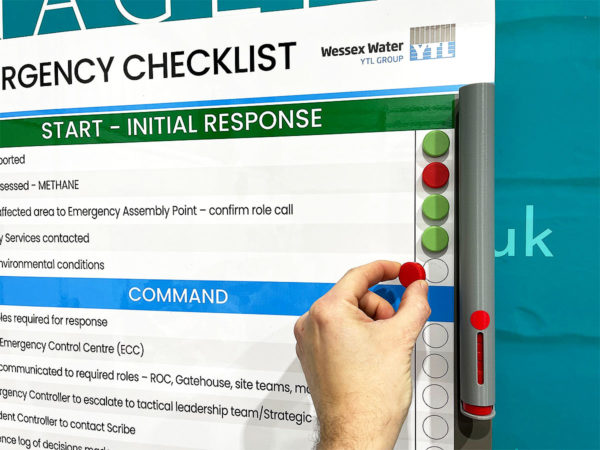
Delivering accessible visibility
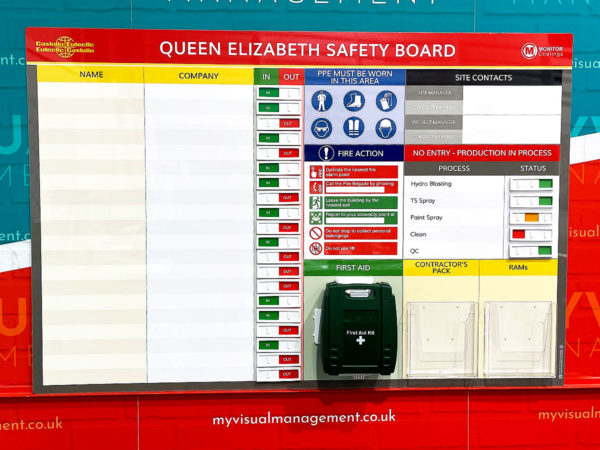
Ensuring key safety communications are highly visible and avaialble
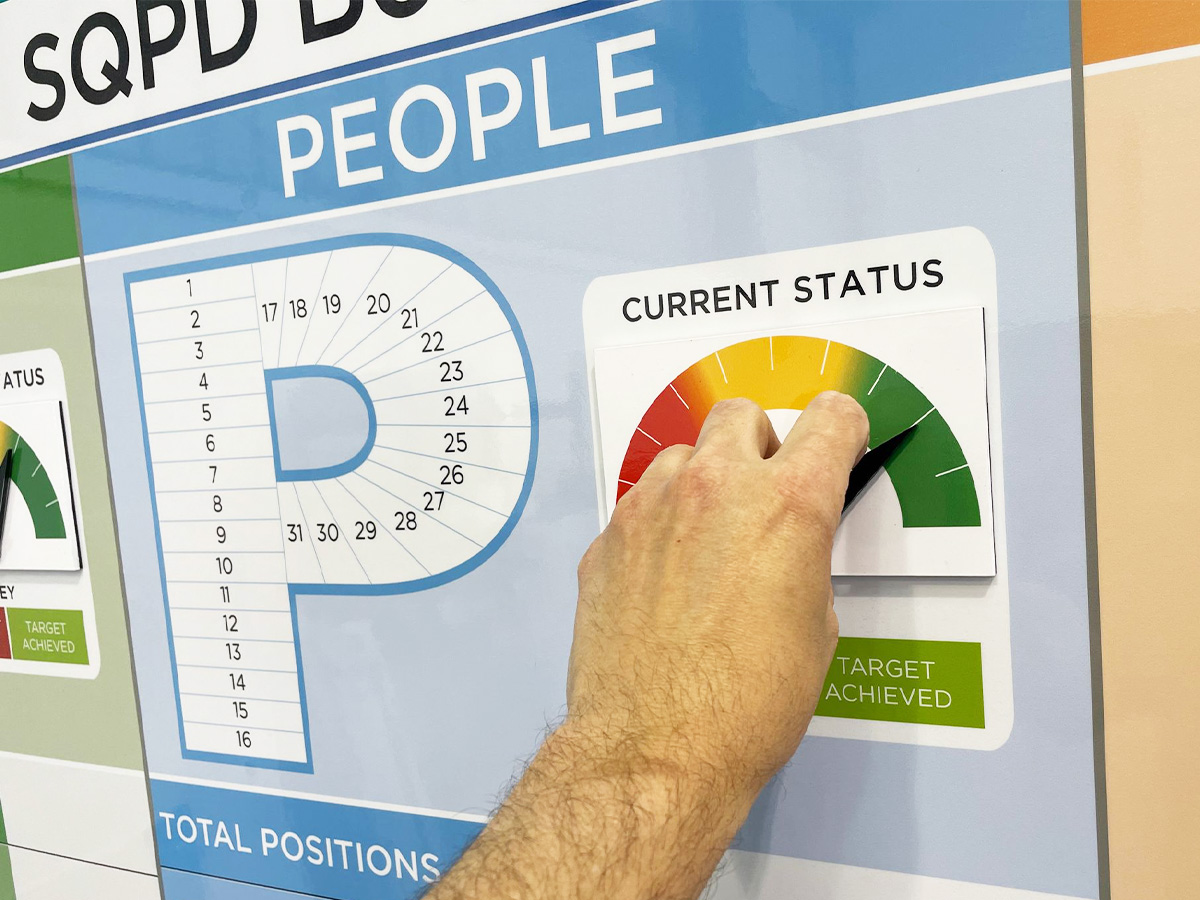
Providing instant visual reference. Above all, at a glance.
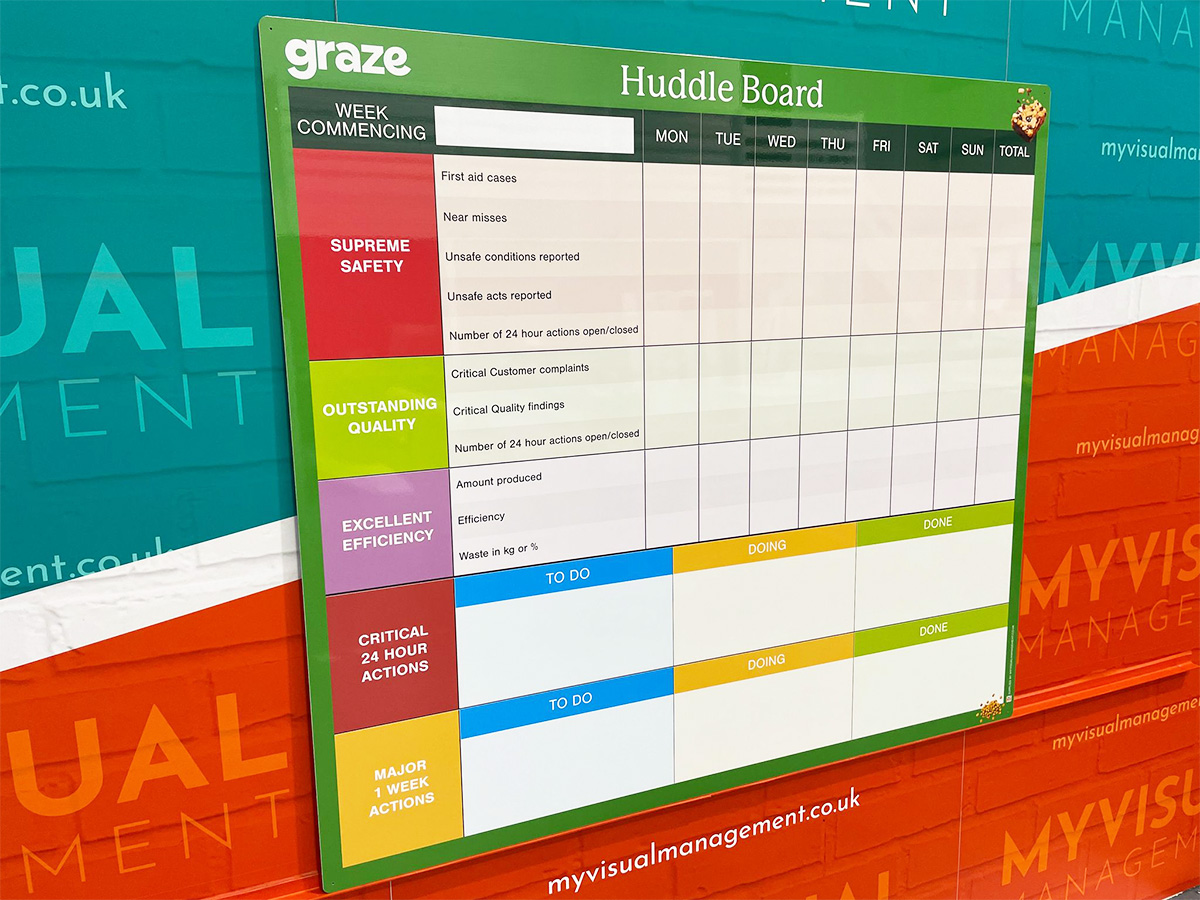
Make team updates accessible for all team members. Likewise, provide a visual framework for daily meetings.
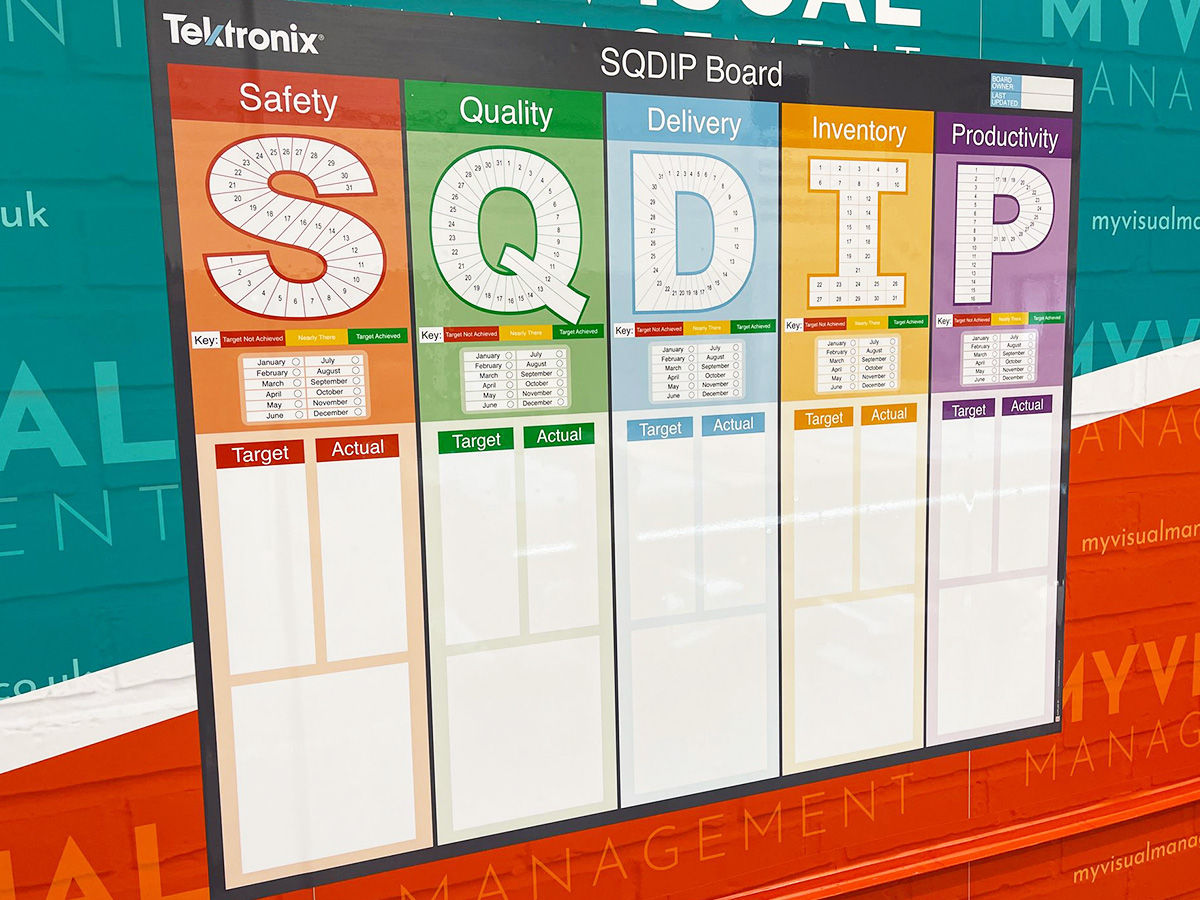
Make visually assessing daily operations easy. Most importantly, use visual status indicators for at a glance reference.
Visually assess performance. Firstly, define performance objectives. Secondly, show status. In addition, take action. Therefore, drive progress.
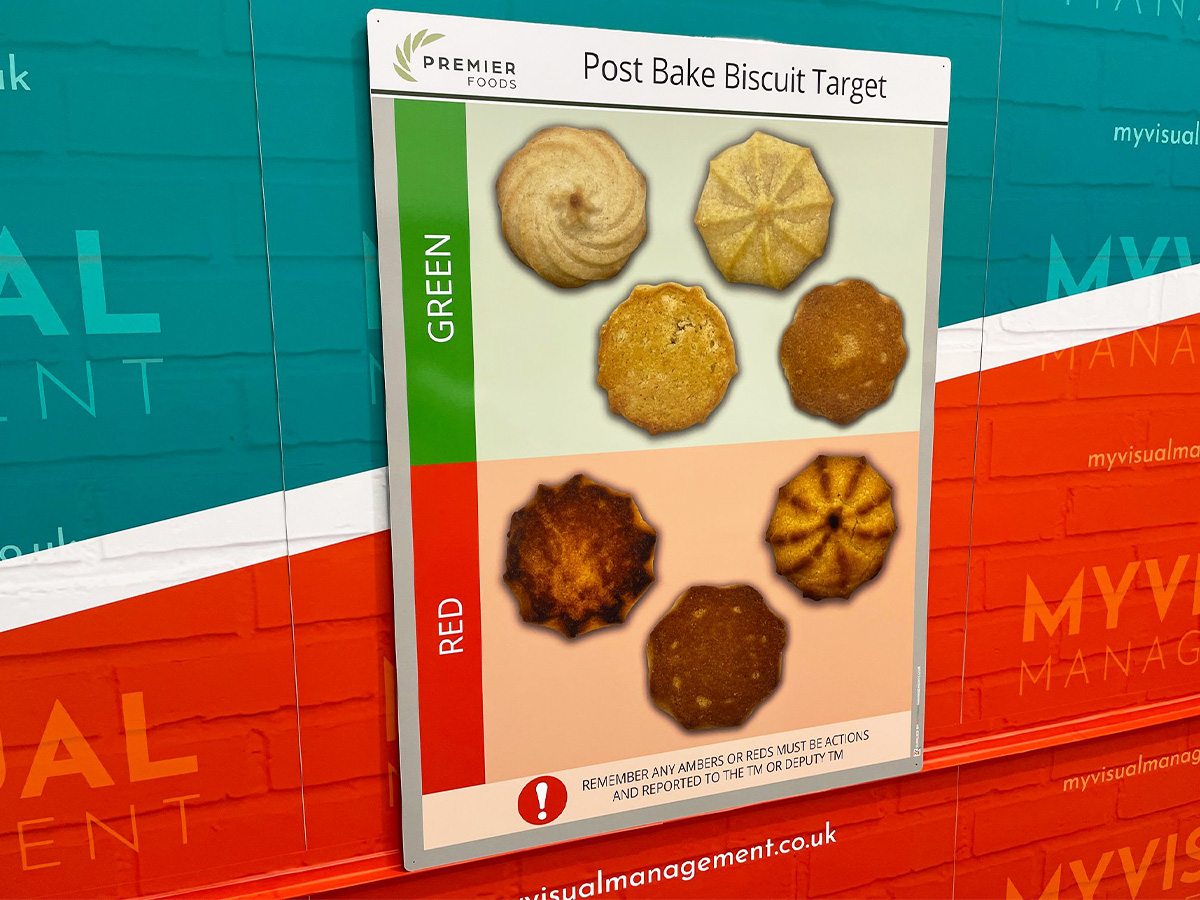
Make standards clear and visual
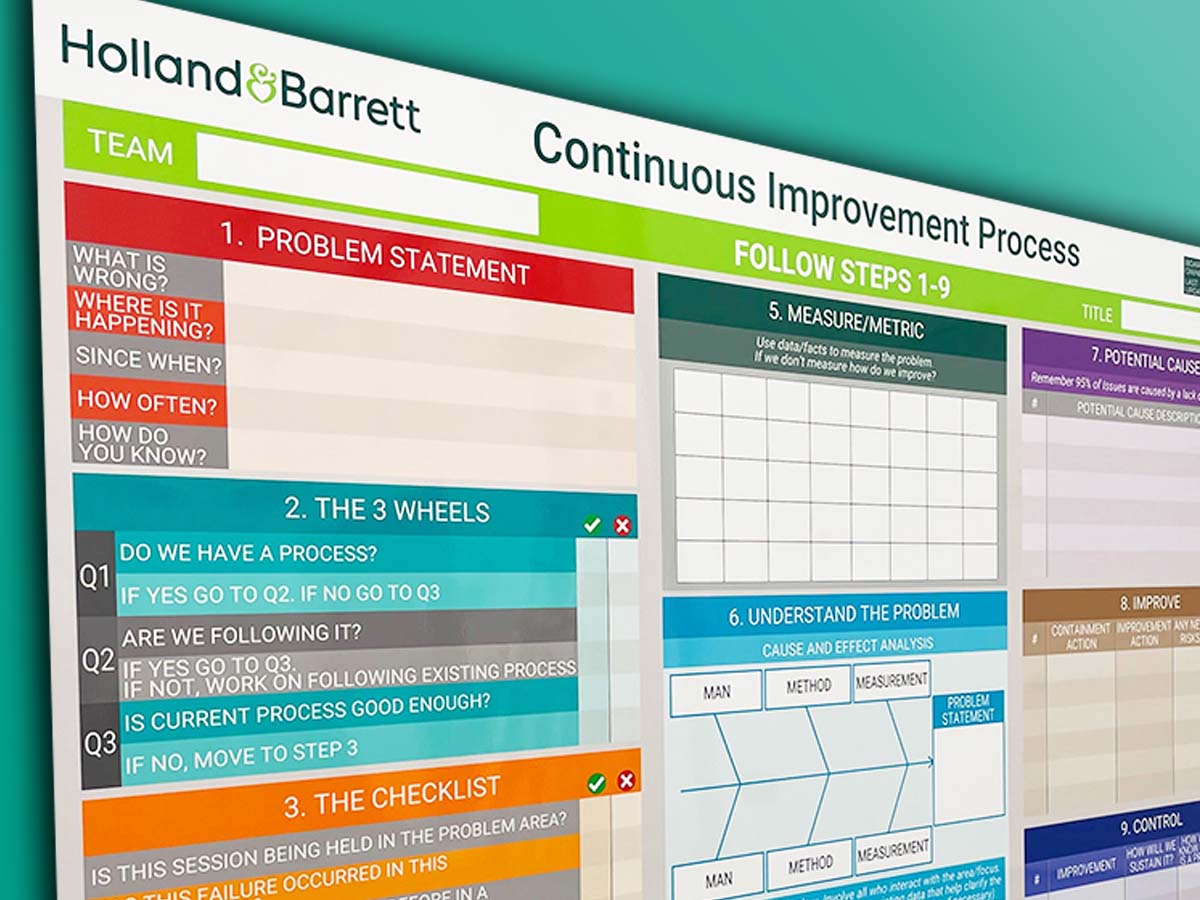
Drive Continuous Improvement
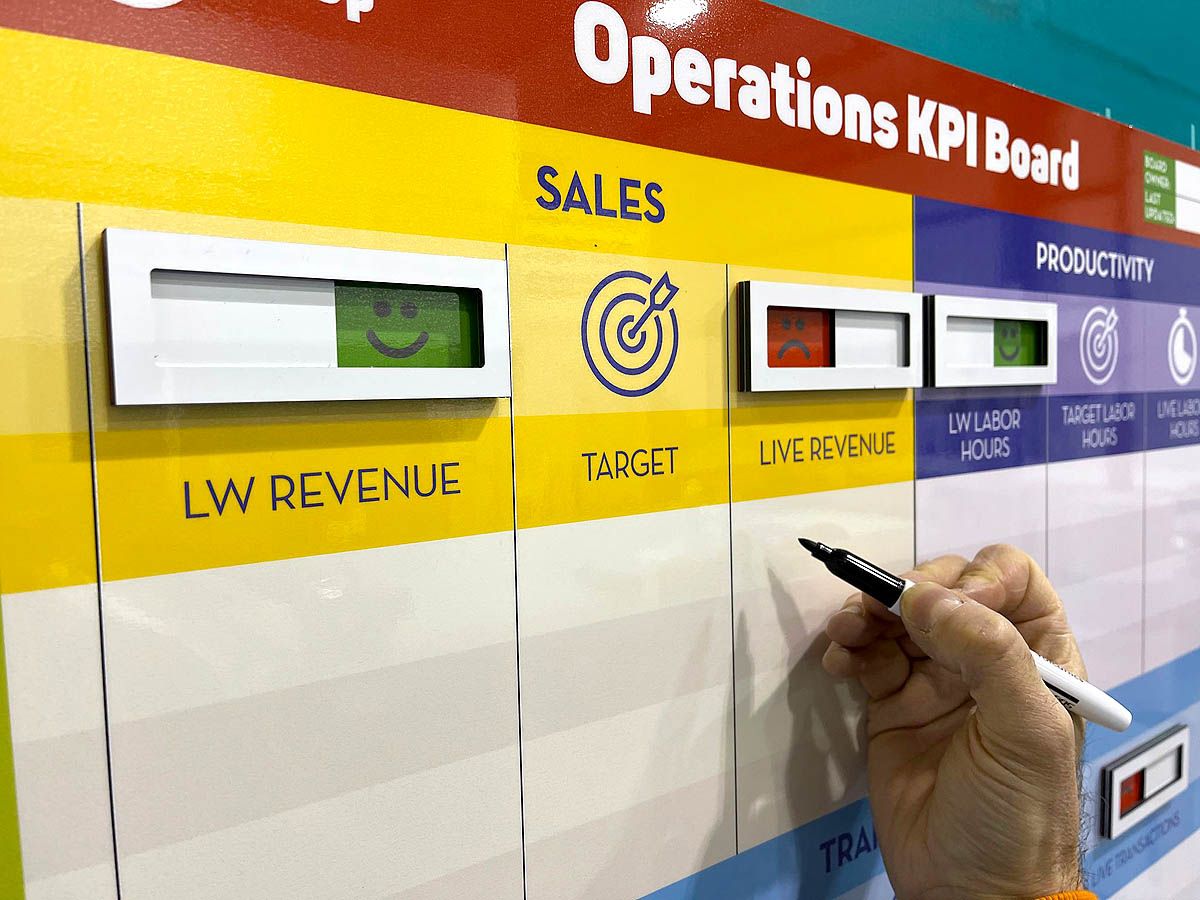
Manage daily operations visually
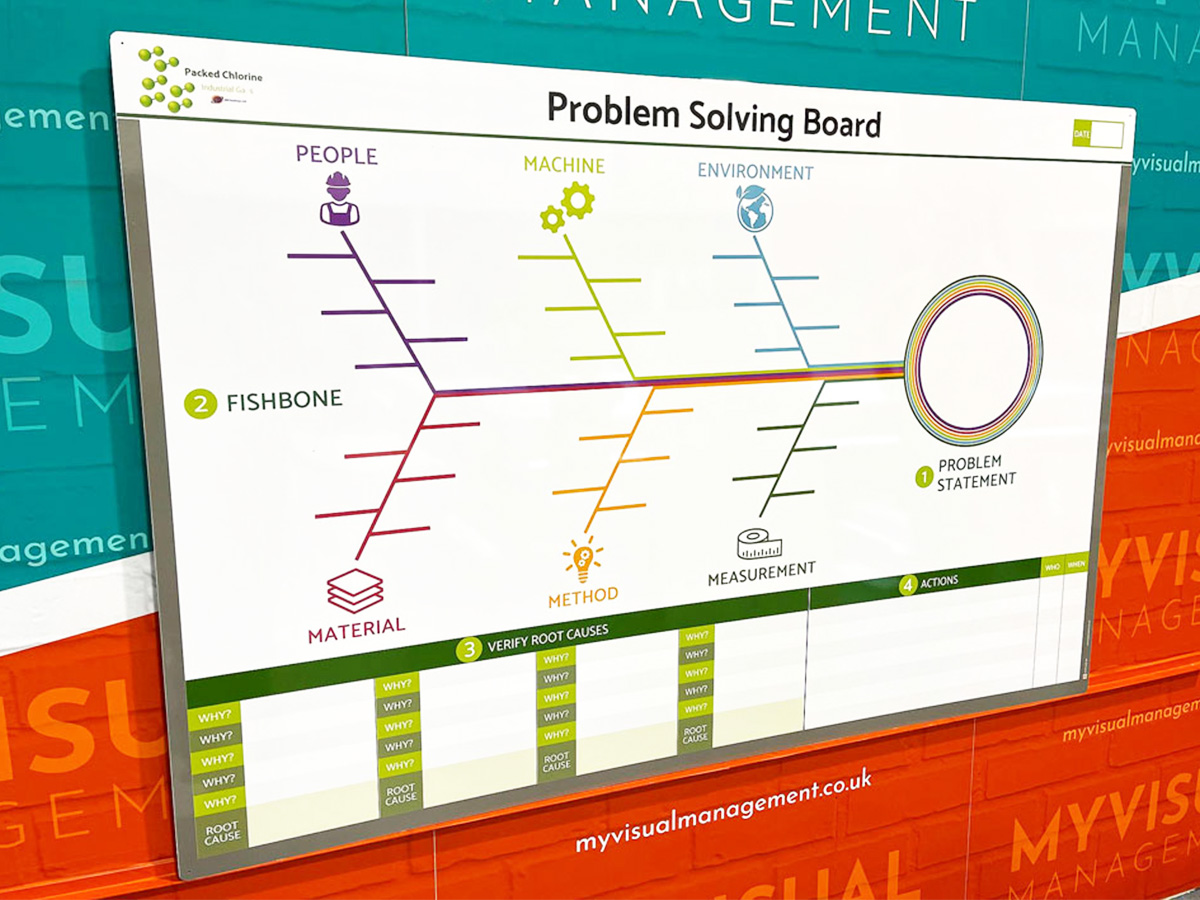
Address issues using a visual framework. Firstly, define the issue. Secondly, find solutions. Above all, support clear thinking
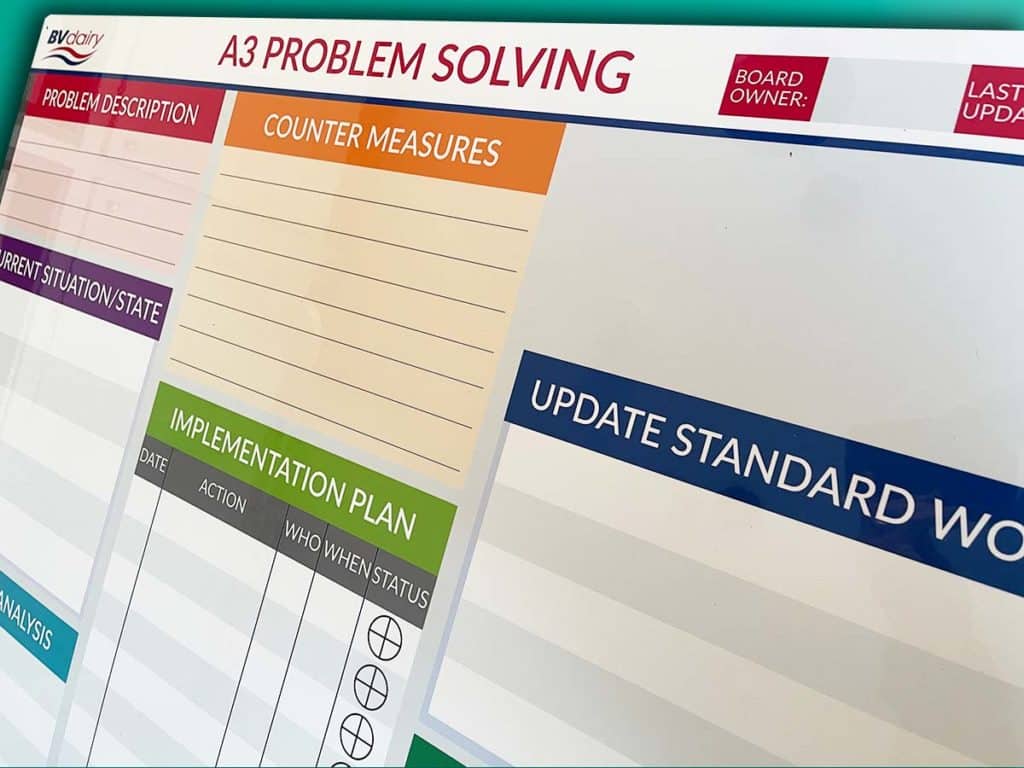
Make your preferred problem solving methods visual
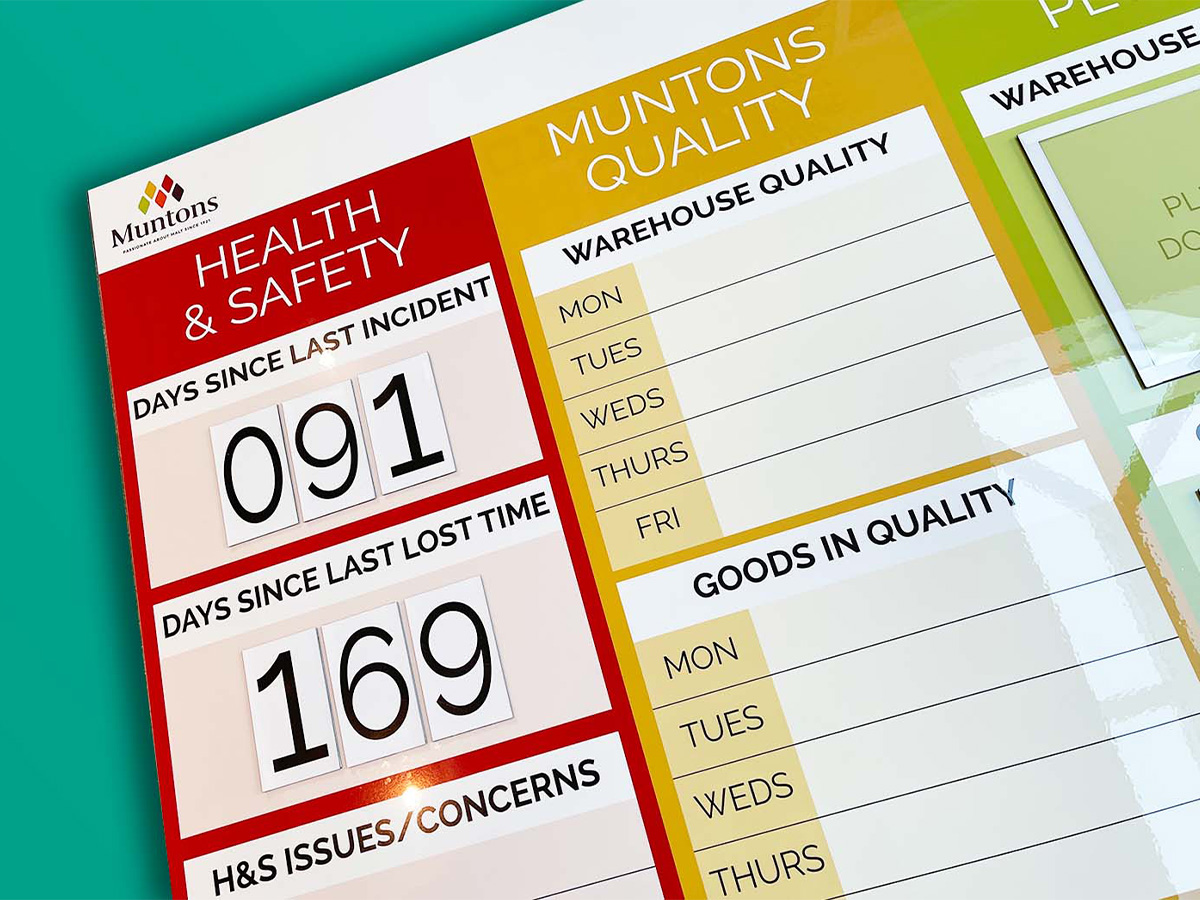
Show progress visually. Likewise, make targets measurable. Therefore, add numerical data
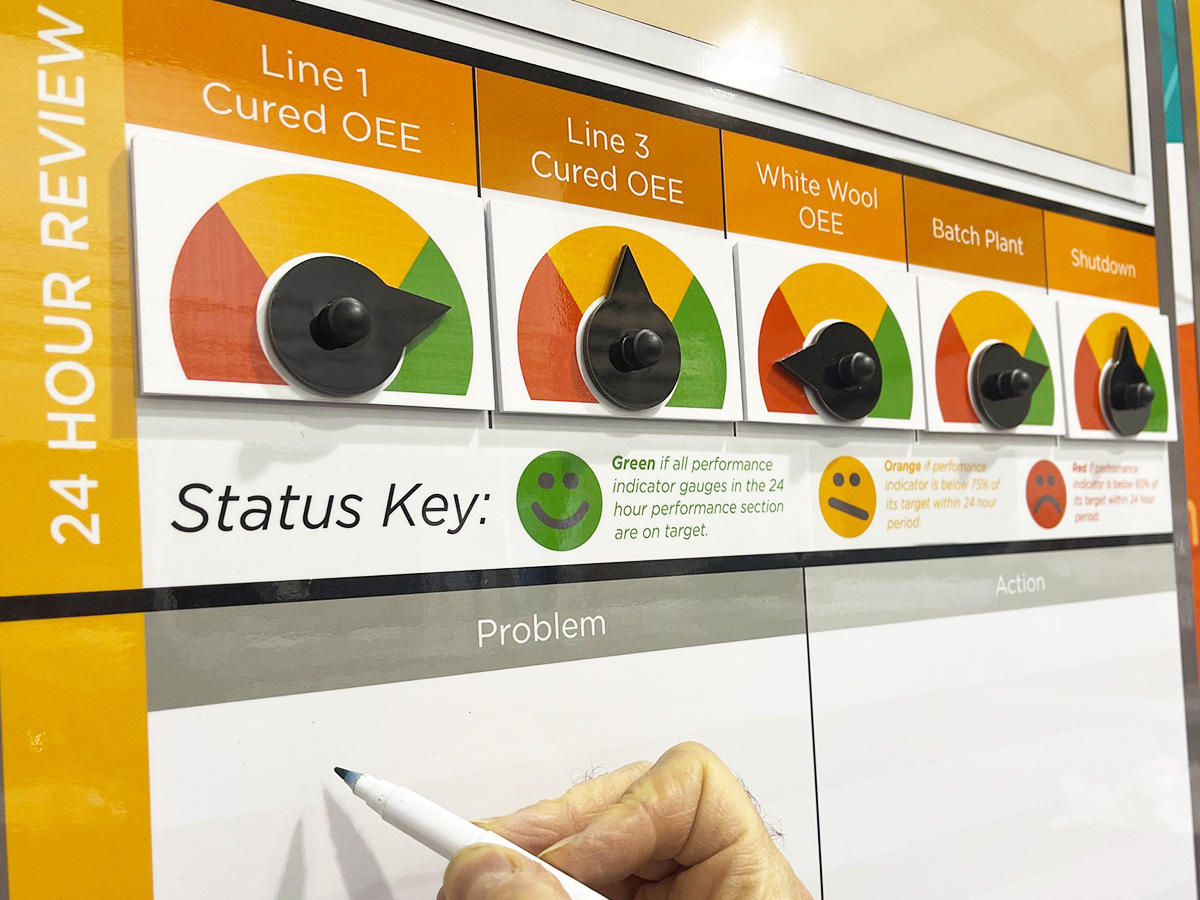
Make use of RAG status. Furthermore, exactly as you need. For example, on this custom board, it is possible to move the dial through the process. Above all, this is what the client needed.
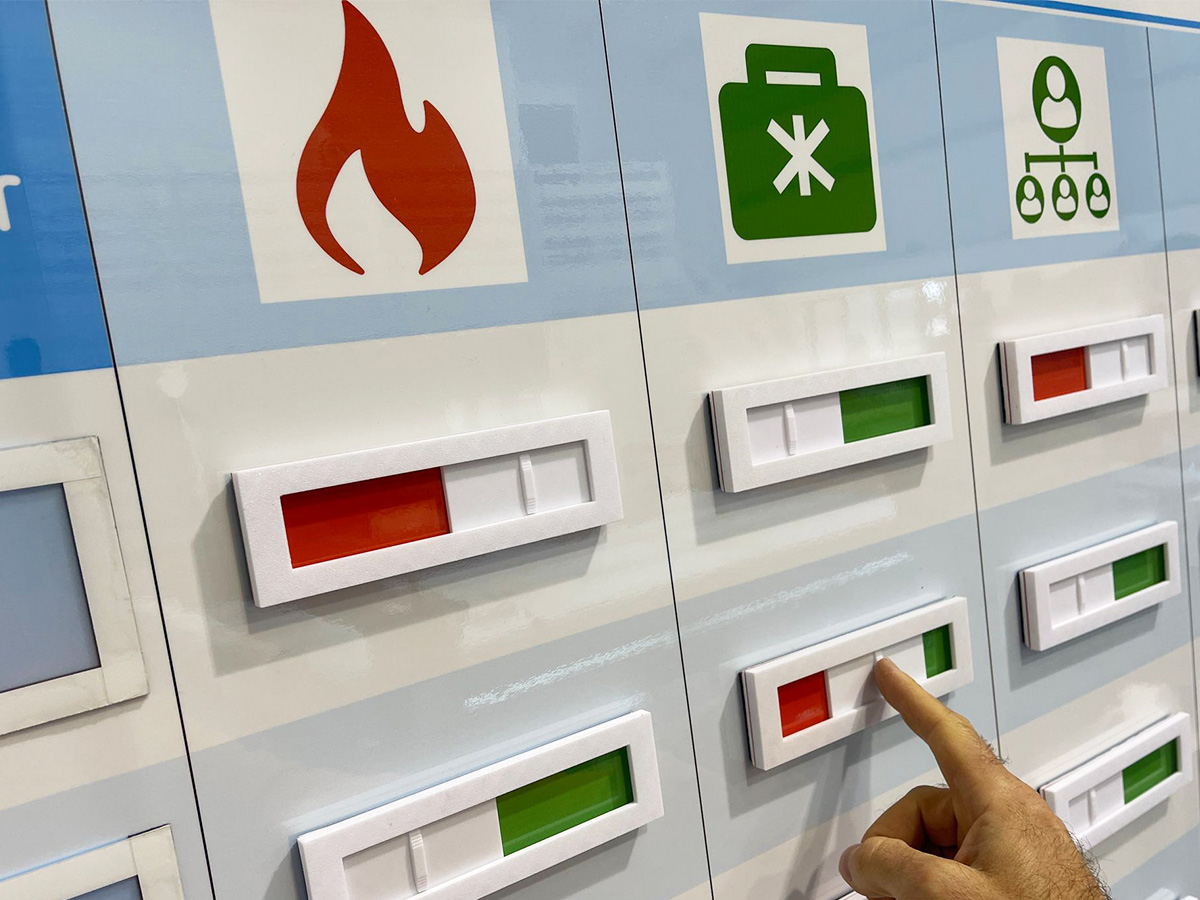
Red Green status sliders are visually effective
Further examples of our Visual Management Boards


Environmental Services Huddle board

Production Area 5S Board

Short Interval Control status

6S Performance Tracker board

Site Safety board
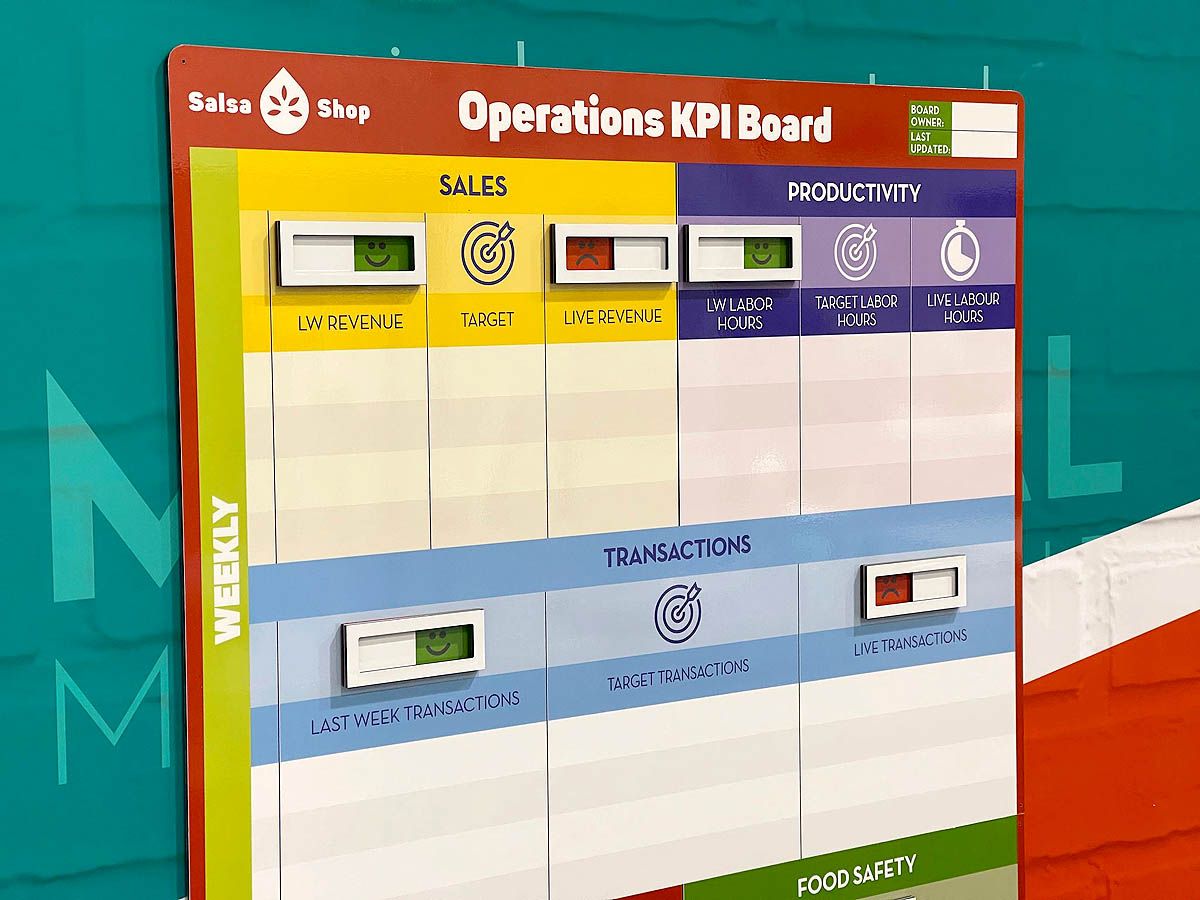
Operations KPI board

Production Board
Food Production Huddle Board

SQDCIP Daily Meeting board

5S board

Continuous Improvement board

Production colour coded board

Suggestions board in four languages

Use colour and graphics on your board

5S board with status meters

Processes for Continuous Improvement

5S scoreboard

Modular Continuous Improvement board

Combination sliders and labels

Quality standards

Environmental objectives
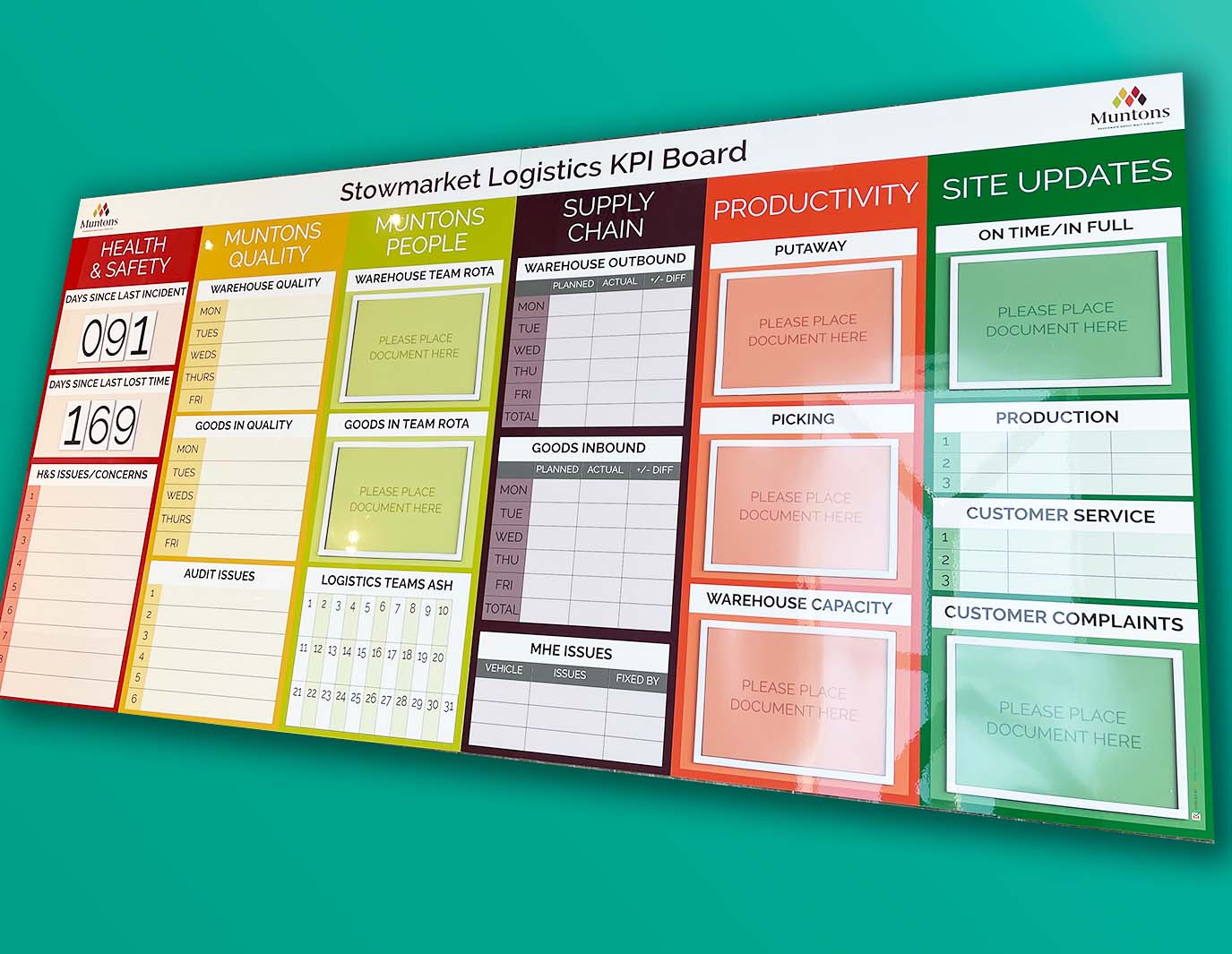
Logistics KPI board

Show your objectives and results

Contractor schedule board

Site plan for leisure

Use for shift pattern information

Add document holders to your board

Compliance whiteboard

SQDC board with status meters

Warehouse safety board

Plan Do Check Act board
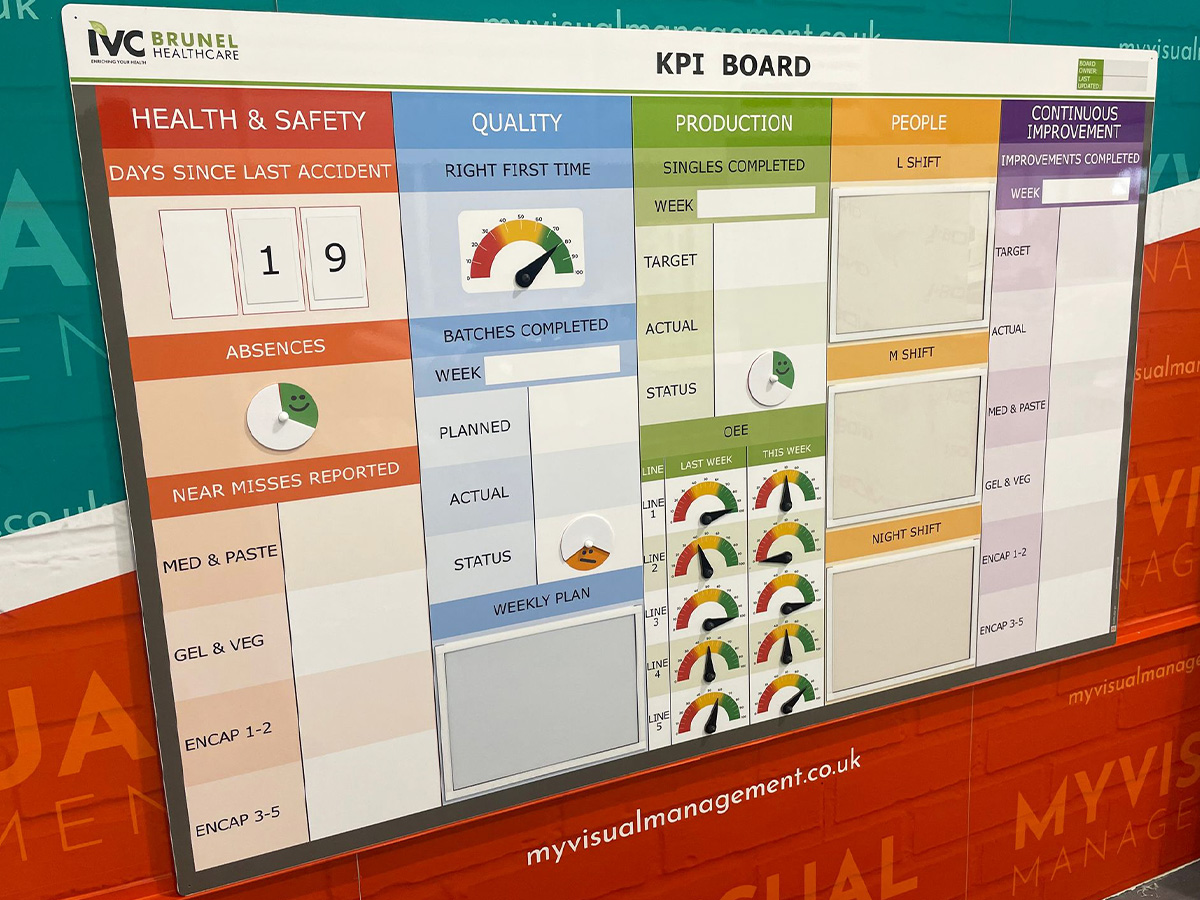
KPI board with status accessories

SQCDE dry wipe board

Golden Six multilingual board

Outdoor educational board

5S dry wipe status indicators

Add status sliders to your board

Sustainability visual management board

Practical Problem Solving board


Our Approach
We create visual management boards everyday. As a result we have plenty of experience. We work for organisations in food production, the power industry, national rail, pharmaceuticals, education, healthcare, packaging and distribution.
Our team works with a simple idea or sketch and creates a professionally designed layout. This is then turned into a highly functional visual management board.
We offer customised options because we want to create the perfect board for you. So, here are a few examples. We can add magnetic areas or a dry-wipe finish (for use with whiteboard pens). Furthermore, you can choose Red/Green sliders or R.A.G. (Red, Amber, Green) status dials so you can quickly and visually update your board. These are just a few examples of the ways in which our boards can be tailored to meet your needs. You may also be interested in whiteboard overlays that can be used on top of an existing magnetic board.