

Food production environments rely on consistent processes, clear communication and well-defined standards. From hygiene and safety to quality and performance, teams need to follow procedures accurately and repeatedly throughout each shift.
In practice, this depends on how clearly information is communicated and how easy it is for teams to understand what is expected at any given time.
The Challenge of Maintaining Consistency
In busy production environments, multiple processes often run at the same time. Teams may work across different areas, shifts may change throughout the day and responsibilities may be shared between operators, supervisors and support staff.
This is particularly important in environments where allergen control, hygiene zoning and cross-contamination risks must be carefully managed.
As a result, organisations need to ensure that:
- standards are clearly defined
- procedures are consistently followed
- performance is visible
- issues are identified and addressed quickly
Without clear systems in place, information can become fragmented, making it harder to maintain consistency.
Making Standards and Processes Visible
Visual management helps bring key information into the workplace, making it visible and accessible at the point of use.
For example, teams may use visual systems to:
- display hygiene and cleaning standards
- show production targets and performance
- communicate quality requirements
- highlight issues and corrective actions
- reinforce standard operating procedures
By making this information visible, teams can more easily understand expectations and maintain consistency.
Supporting Food Safety and Hygiene Control
In food production, hygiene and food safety processes are critical. These processes often rely on clear routines, defined responsibilities and consistent application.
Visual systems can support this by:
- clearly displaying cleaning schedules and responsibilities
- showing status of completed and outstanding tasks
- reinforcing hygiene standards and procedures
- supporting audits and compliance checks
As a result, teams can follow processes more consistently and reduce the risk of error.
In many food production environments, including those operating to standards such as BRCGS or SALSA, clear and consistent processes are essential. Visual systems can help reinforce these standards by making expectations visible and supporting routine compliance across teams.
Supporting Daily Management and Performance
Many food production environments use daily management routines to track performance and coordinate activity.
Visual boards can support these routines by:
- showing key performance indicators (KPIs)
- tracking output, downtime and quality
- highlighting issues and actions
- supporting team communication during shift handovers
This helps teams stay aligned and respond quickly to changes in production.
Coordinating Teams and Shifts
Shift-based working is common in food production, and maintaining continuity between shifts is essential.
In practice, this may include managing production lines, hygiene zones or allergen-controlled areas, where clarity and consistency are critical.
Visual systems can support this by:
- providing a shared reference point for teams
- showing current status and priorities
- supporting clear handovers between shifts
- maintaining visibility of ongoing issues
By keeping information visible, teams can quickly understand what has happened and what needs to happen next.
Supporting Audit and Compliance Requirements
Food production environments are subject to regular audits and compliance checks. These may include internal audits, customer audits and external standards.
Visual management can support audit readiness by:
- making processes and standards visible
- providing clear evidence of routine activity
- helping teams demonstrate consistency
- supporting communication during audits
This helps ensure that processes are not only documented, but also actively followed.
Maintaining Control in a Fast-Paced Environment
Food production environments can be fast-paced and complex. Maintaining control depends on clear communication, consistent processes and shared understanding across teams.
Visual management supports this by making key information easy to see, understand and act on.
In this way, organisations can help ensure that standards are maintained, processes are followed and performance is clearly understood.
In environments where consistency and traceability are essential, visual systems help ensure that processes remain active, visible and understood across teams.
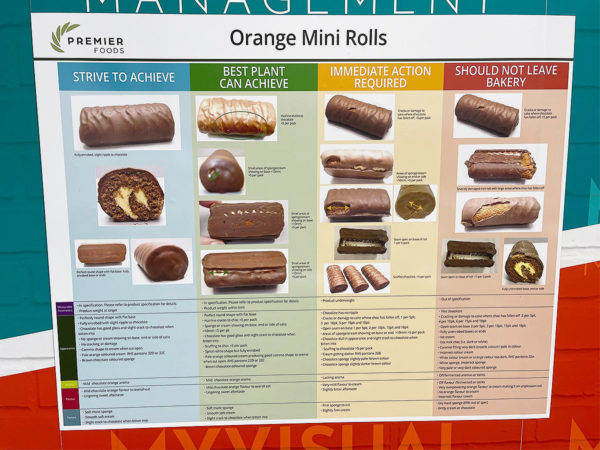
Make Quality standards clear
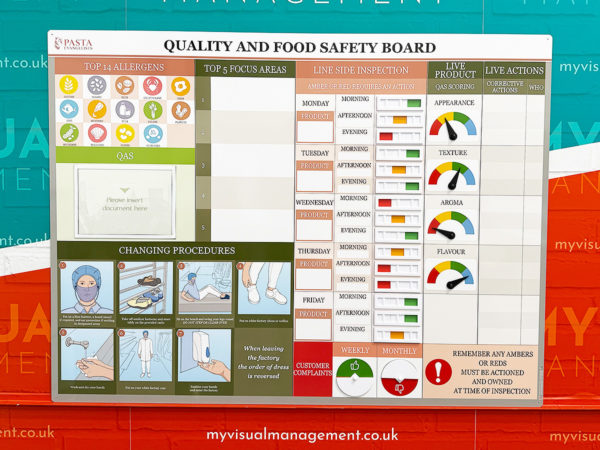
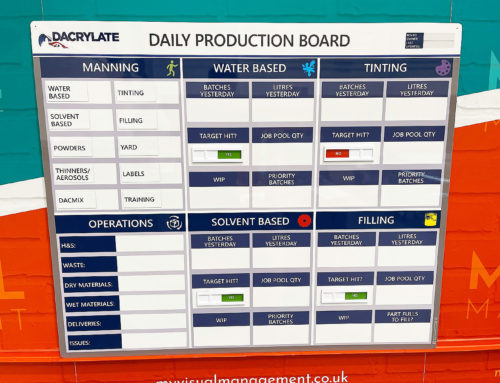
Visual management board used in a food production environment
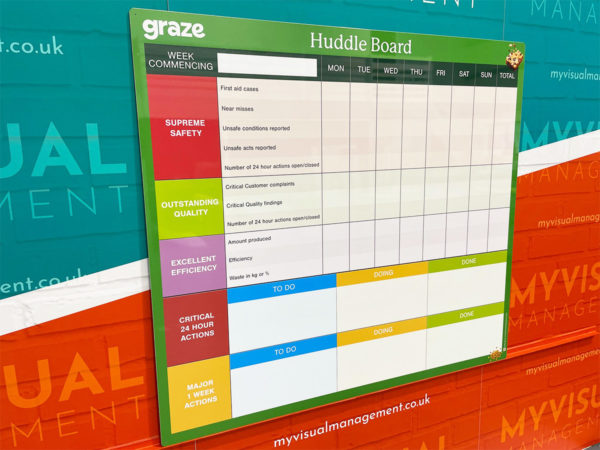
Facilitate team huddles
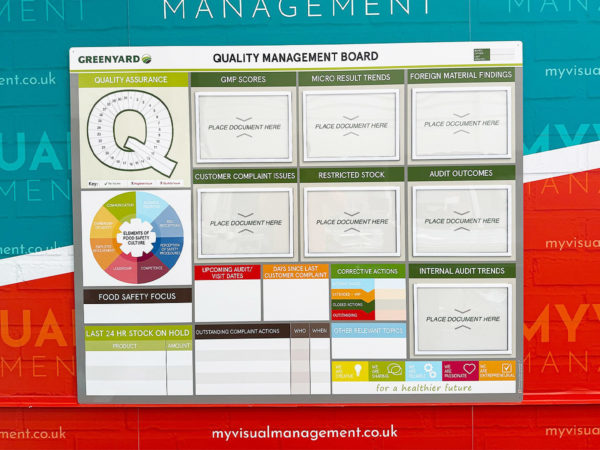
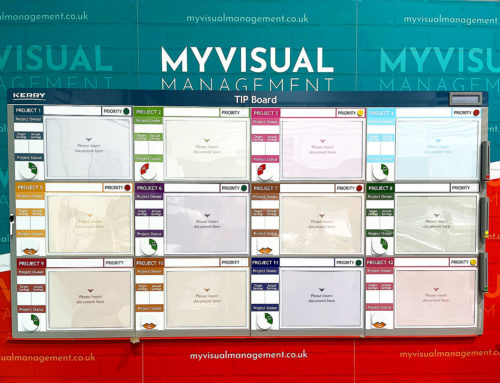
Daily management board supporting production control
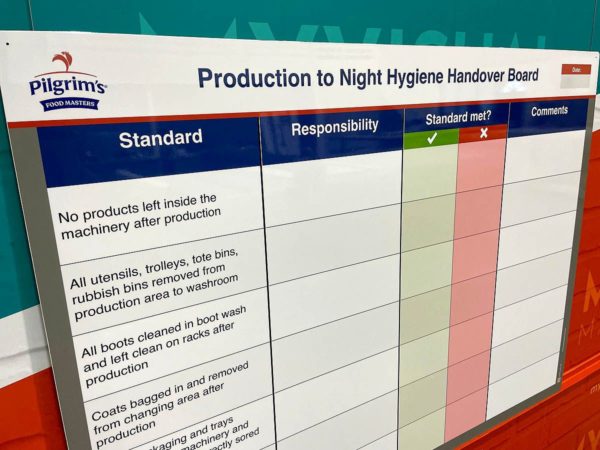
Support production visually
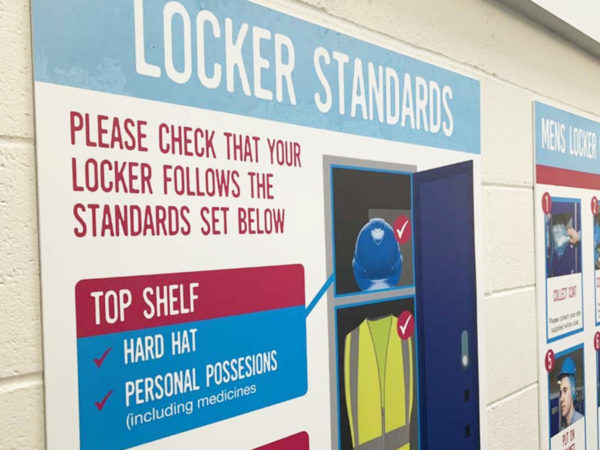
Show case PPE and standards at the point of need
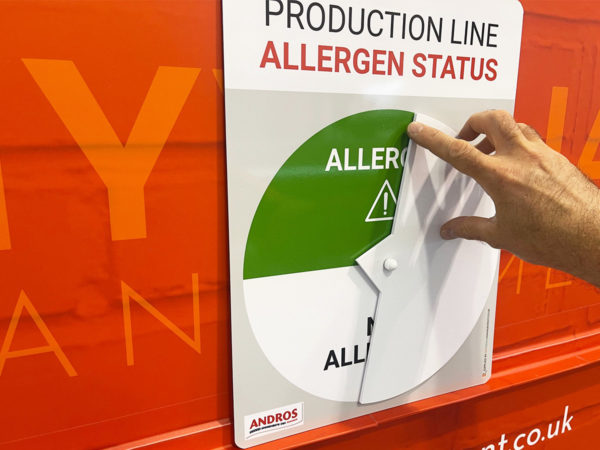
Visual allergen management system in a production environment
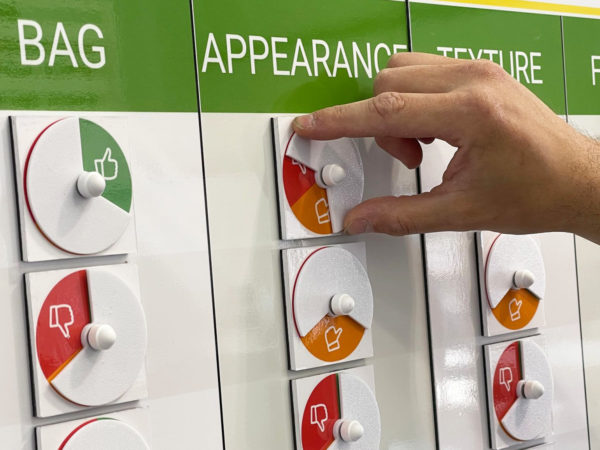
Engage your team with visuals you can update to show status
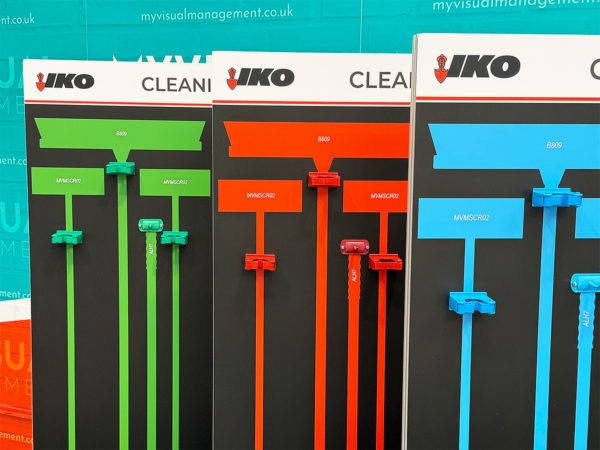
Support segregation with colour coding
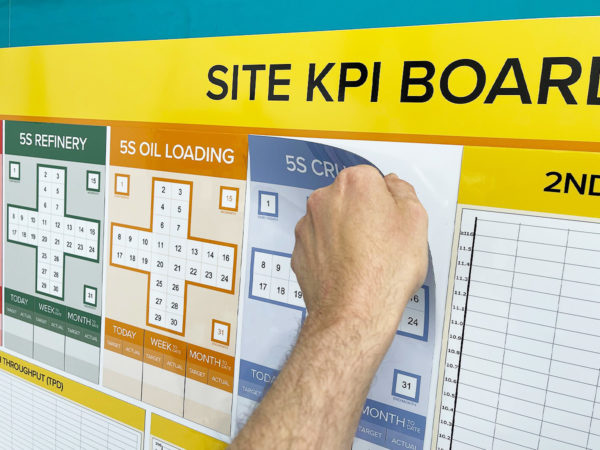
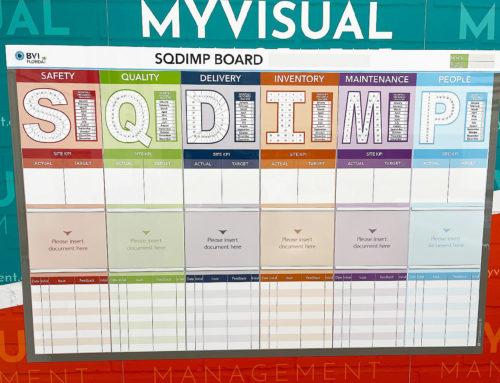
KPI board tracking production performance in real time


Our Approach
We create visual management boards everyday. As a result we have plenty of experience. We work for organisations in food production, the power industry, national rail, pharmaceuticals, education, healthcare, packaging and distribution.
Our team works with a simple idea or sketch and creates a professionally designed layout. This is then turned into a highly functional visual management board.
We offer customised options because we want to create the perfect board for you. So, here are a few examples. We can add magnetic areas or a dry-wipe finish (for use with whiteboard pens). Furthermore, you can choose Red/Green sliders or R.A.G. (Red, Amber, Green) status dials so you can quickly and visually update your board. These are just a few examples of the ways in which our boards can be tailored to meet your needs. You may also be interested in whiteboard overlays that can be used on top of an existing magnetic board.